THE HUMANE DYNAMIC: WHY KATUNG’S LEADERSHIP STYLE IS A BLUEPRINT FOR NIGERIA’S FUTURE
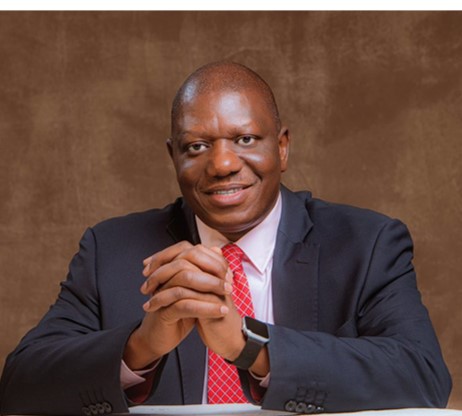
THE HUMANE DYNAMIC: WHY KATUNG’S LEADERSHIP STYLE IS A BLUEPRINT FOR NIGERIA’S FUTURE
Dr Francis Fagjot John, Led – Kaduna Diaspora Support Services (KDSS), Kansas City – USA
The most revealing moment of Senator Sunday Marshall Katung’s tenure may not have occurred in the hallowed chambers of the Senate. It may have occurred in the corridors of an under-equipped primary healthcare centre in Samaru Kataf, where nurses who had been turning away pregnant women for lack of basic supplies hugged him.
That embrace—between the powerful and the vulnerable—captures what admirers call Katung’s “humane dynamic.” It is a leadership style that is at once singular and collective: singular in its personal commitment, collective in its approach to solving problems.
A Plural Dynamic, A Collective Outreach: Katung does not govern alone. His appointments reflect a deliberate strategy of inclusion. Two of his five legislative aides are from Sanga and Kauru LGAs—areas that had been neglected in the past—fulfilling a campaign promise to spread opportunity across all eight local government areas. His empowerment programmes are non-partisan by design, with selection processes that prioritise need over political affiliation.
His appointment of a Special Adviser on Muslim Matters—the first in the district’s history—was a gesture that transcended symbolism. It signalled that Southern Kaduna’s diversity, often a source of tension, could become a foundation for unity.
The Testimonies That Matter: The most credible testimonies are not those of politicians but of the people whose lives have changed.
Gloria Ballason, Chairperson of the Foundation’s Scholarship Committee, noted that 3,125 students applied for the scholarship scheme, with 400 selected after a rigorous and transparent process. “It is our hope that this support will make the difference between staying in school and dropping out,” she said.
Elder Bature Likoro, Chairman of the Southern Kaduna Community Development Associations, described the scholarship initiative as “borne out of the senator’s genuine desire to support students whose educational dreams are threatened by financial challenges”.
Prof. John La’ah, delivering a lecture on STEM education at the scholarship presentation, emphasised that science and technology remain key to innovation and sustainable development—a vision that Katung has embraced through his educational initiatives.
Engr. Sanusi Jibrin and Garba Stephen Dakut, the APC and PDP chairmen in Kachia and Kauru LGAs respectively, jointly commended Katung’s “unwavering commitment to the welfare of his constituents” during the IDP relief distribution—a rare moment of cross-party recognition.
The Road Ahead: 2027 and Beyond: Katung’s re-election bid, formally declared in April 2026, is anchored on a simple proposition: consolidation. “I am seeking a second term to consolidate on the gains we have made, complete ongoing initiatives, and continue to provide quality representation to our people,” he said. He has pledged support for President Bola Tinubu’s “Renewed Hope” agenda and Governor Uba Sani’s development blueprint, arguing that experienced lawmakers are needed to translate federal policy into grassroots impact.
The Southern Kaduna Integrity Forum, in endorsing him, cited not just his projects but his character. “Distinguished Senator Marshall Katung has brought unity among the eight local governments in less than three years,” said Convener Samuel Tajo. “He is a good man”.
A Legacy in the Making: For the Kaduna Diaspora Support Services (KDSS), the case for Katung is not merely about one election. It is about a model. If Katung succeeds, he will have demonstrated that Nigerian politics can produce leaders who are accountable, accessible, and effective. He will have shown that a senator can be both a legislator and a servant. He will have proven that the red dust of Southern Kaduna can be the foundation of a legacy that resonates from Kafanchan to Kansas City, from Zangon Kataf to United Kingdom.
The question is not whether Katung deserves a second term. The evidence is overwhelming. The question is whether Nigeria is ready to recognize—and replicate—the kind of leadership he represents.
Kaduna Diaspora Support Services (KDSS) is a diaspora-driven initiative focused on unbiased promotion of Kaduna State on the global stage and the provision of sustainable solutions to evolving, expanding, and increasing socioeconomic development challenges. Operating in partnership with a consortium of like-minded organizations, KDSS serves as a bridge between Kaduna indigenes in the diaspora and the developmental aspirations of their homeland.
KDSS invites Kaduna indigenes across the world—professionals, entrepreneurs, academics, and philanthropists—to join its consortium. By pooling resources, expertise, and networks, the diaspora can play a transformative role in Kaduna’s development journey. KDSS provides the framework; the collective effort of Kaduna’s global community provides the power.
For partnership enquiries and membership information, interested parties may contact the Kaduna Diaspora Support Services (KDSS), Kansas City, United States.
Special Acknowledgement: This work was enriched by the invaluable contributions of Dorathy Elisha, advocate and member of the Kaduna Diaspora Chamber of Commerce from South Africa, whose dedication to the diaspora’s engagement with Kaduna’s development is hereby formally acknowledged and credited.
#Katung2027 #SouthernKadunaRising #APC #Nigeria #RenewedHope #KadunaDiaspora #SMKLegacy #InclusiveGovernance #EducationForAll #WomenEmpowerment #CommunityDevelopment #NigeriaDecides2027 #KadunaSouth #AfricanLeadership