THE GREAT AMERICAN EXTRACTION: How Big Tech, Antivirus Scams, and Software Addiction Are Bleeding American Families Dry
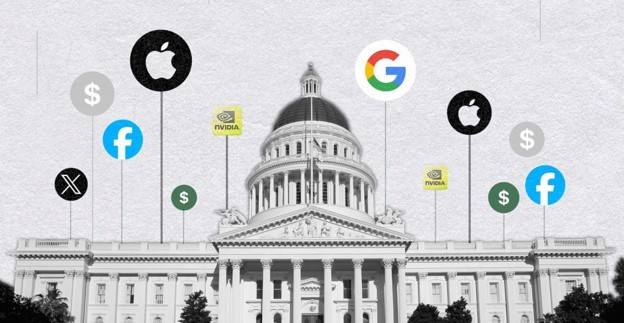
THE GREAT AMERICAN EXTRACTION: How Big Tech, Antivirus Scams, and Software Addiction Are Bleeding American Families Dry
By Francis Fagjot John, Ph.D.
Editor & Publisher, TipsNews Global
Executive Director, America Media Consultants
📢 A National Call to Action
“The FTC will hold accountable payment companies that knowingly facilitate payments for scammers or look the other way when faced with red flags about their clients’ conduct.”
— Federal Trade Commission
THE SYSTEMATIC EXTRACTION OF THE AMERICAN PEOPLE
Mr. President, Members of Congress, and the American People:
This is not merely about privacy. This is not merely about spam. This is about a systematic, multi-billion-dollar extraction economy that has been deliberately engineered to bleed American families dry—one subscription, one renewal, one deceptive charge at a time.
The technology industry has perfected a business model that operates on three pillars:
- Create the problem (viruses, spam, data vulnerabilities)
- Sell the “solution” (antivirus software, cloud storage, security services)
- Make the solution addictive and impossible to cancel (subscription traps)
And when you complain, they apologize and keep your money.
PART I: THE ANTIVIRUS SCAM INDUSTRY
The Problem They Created
Computer viruses, malware, and security threats are real. But the antivirus industry has transformed legitimate concern into a $30 billion annual extraction machine that preys on fear, confusion, and the elderly.
The Federal Trade Commission has documented extensive deceptive practices across the antivirus industry:
Avast: The $15.3 Million Deception
In February 2024, the FTC alleged that Avast used its browser extensions and antivirus software to collect, store, and sell consumers’ browsing information without adequate notice and without consumer consent.
The FTC order required Avast to pay nearly $15.3 million to affected consumers. The FTC is now sending 103,152 payments totaling that amount to people who bought Avast’s deceptively marketed antivirus software.
The deception was systematic:
- Avast claimed the software would “protect consumers’ privacy by blocking third party tracking”
- But it failed to adequately inform consumers that it would collect and sell their detailed browsing data
In other words: Avast sold you a privacy solution while secretly violating your privacy.
Additionally, Avast agreed to pay $16.5 million to settle a class action lawsuit for alleged deceptive privacy practices, including the unauthorized sale of user browsing data to third parties.
The $26 Million Tech Support Scam
A pair of tech support businesses accused of swindling Americans out of their hard-earned money agreed to pay a $26 million settlement following an undercover probe by the FTC.
The FTC went undercover to investigate suspected antivirus scams that targeted consumers—including older adults—with deceptive representations and deceptive calls in violation of the Telemarketing Sales Rule.
The $5 Million Paddle Settlement
On June 17, 2025, the FTC announced a settlement with Paddle.com Market Limited, resolving allegations that the company facilitated deceptive tech-support services.
According to the FTC, Paddle failed to perform adequate screening and fraud prevention, enabling foreign operators like Restoro and Reimage to run tech-support scams that harmed many U.S. consumers.
The settlement includes:
- A $5 million payment
- A permanent ban on Paddle from processing payments for tech-support telemarketers or companies that use pop-ups regarding computer security or performance
This is the pattern: Foreign operators create fake virus warnings. They scare Americans into paying for “solutions.” Payment processors facilitate the fraud. And the victims—often elderly Americans on fixed incomes—lose hundreds of dollars they cannot afford.
The $25 Million Tech Support Fraud
More than $25 million in payments went out to customers who were tricked into paying for fraudulent tech support offered by two companies.
PART II: THE SUBSCRIPTION ADDICTION ECONOMY
The “Click to Cancel” Crisis
The technology industry has perfected the art of the subscription trap—making it easy to sign up and nearly impossible to cancel.
The FTC’s “Click to Cancel” Rule was designed to require sellers to make it as easy for consumers to cancel subscriptions as it was to sign up for them. However, a federal court nullified this rule.
Congress must act. Representative Deluzio and colleagues introduced the “Click to Cancel Act” to give the FTC’s rule the full force of law so that people can cancel subscriptions just as easily as they sign up for them.
The Amazon $2.5 Billion Subscription Settlement
In September 2025, the FTC settled with Amazon over alleged subscription traps. The settlement included:
- A $1 billion civil penalty
- $1.5 billion in refunds
$2.5 billion. That is what one company extracted from American families through deceptive subscription practices.
The Cost to American Families
Year after year, little by little, Americans are being bled dry.
| Year | Extraction Method | Amount |
|---|---|---|
| 2024-2025 | Avast deceptive privacy claims | $15.3 million refunds |
| 2025 | Avast class action settlement | $16.5 million |
| 2025 | Tech support scam settlement | $26 million |
| 2025 | Paddle settlement | $5 million |
| 2025 | Amazon subscription traps | $2.5 billion |
| 2025 | Google privacy verdict | $425 million |
| 2025 | Google Texas settlement | $1.375 billion |
| TOTAL (Selected Cases Only) | Over $4.3 billion |
This is not a few bad actors. This is a systemic problem.
PART III: THE SOFTWARE DEVELOPMENT LIABILITY CRISIS
Creating Apps Without Accountability
Mr. President, I must address a fundamental flaw in our legal and regulatory framework:
If you create an application, you must be held accountable for its security and its consequences.
Yet software developers routinely release products with known vulnerabilities, collect vast amounts of sensitive data without adequate security, and when breaches occur, they apologize and move on.
The CrowdStrike Catastrophe
In July 2024, a flawed Falcon content update from CrowdStrike caused major worldwide technology outages, crashing more than 8 million Microsoft Windows-based computers worldwide.
A shareholder lawsuit alleged that CrowdStrike concealed its inadequate software testing and quality assurance procedures.
The lawsuit further alleged that defendants made false and/or misleading statements and failed to disclose the true state of their software quality assurance.
8.5 million computers crashed. Travelers were stranded in airports. Businesses were paralyzed. And CrowdStrike’s response? They claimed the lawsuits against them were preempted.
This is the pattern: Create defective software. Cause widespread damage. Deny responsibility. Apologize. Move on.
The MOVEit Data Breach: Negligence Is Not a Defense
In the MOVEit Customer Data Security Breach Litigation, a Massachusetts federal court ruled that negligence claims survive based on a duty to implement reasonable safeguards.
The court held that Progress Software owed a duty to design and maintain secure software.
This is a landmark ruling: Software vendors can be held liable for negligence when they fail to implement reasonable security measures.
The Accellion Ruling: A Duty of Care
A California federal judge refused to end a proposed data breach class action accusing Accellion of negligently failing to protect against cyberattacks on its file-sharing software.
The court ruled that a special relationship exists between Accellion and its customers, such that it owed a duty of care to them.
Software vendors have a duty of care to their users. This must be codified into law.
The Appfolio Data Breach
A data breach class action alleges that Appfolio’s inadequate security measures led to unauthorized access of more than 40,000 individuals’ sensitive personal information through a vendor’s customer relationship management system.
40,000 people. Their personal information exposed. Their identities at risk. Their trust violated. And what accountability?
PART IV: GOVERNMENT AGENCIES ARE NOT SPARED
The Irony of Government Data Breaches
Mr. President, the very agencies charged with protecting Americans are themselves compromised.
The largest and most consequential data breach in U.S. history is currently ongoing at the U.S. Department of the Treasury and U.S. Office of Personnel Management.
The OPM Data Breach
In 2015, the OPM publicly disclosed that it had been subject to a data breach affecting over 20 million people.
A class-action lawsuit filed against the OPM in late January 2025 alleges that the agency violated federal privacy laws when rolling out a new communication system enabling email blasts to all federal employees.
The DOGE Data Access Controversy
In February 2025, agents working for Elon Musk’s Department of Government Efficiency (DOGE) accessed highly restricted government records on millions of federal employees maintained by the Office of Personnel Management.
The Electronic Privacy Information Center (EPIC) challenged this alleged unauthorized access to sensitive federal employee and taxpayer data.
EPIC alleged that Treasury and OPM officials granted unauthorized individuals access to highly sensitive federal databases, compromising the personal information of millions of federal employees and taxpayers.
The Treasury Database Deletion
In December 2025, federal law enforcement arrested twin brothers Muneeb and Sohaib Akhter for their alleged roles in compromising or deleting dozens of government databases.
The investigation found that the brothers improperly accessed sensitive documents and compromised or deleted dozens of databases, including those that contained data from the Internal Revenue Service and the General Services Administration.
The IRS. The Treasury. OPM. State Department. All compromised.
And what do we hear? Apologies. Diversionary penalties. Promises to do better.
Americans cannot afford to compromise on due diligence, transparency, and accountability. If everyone is within the law, and the law works for all equally, then the law must be enforced equally—against corporations and government agencies alike.
PART V: THE CUMULATIVE BURDEN ON AMERICAN FAMILIES
Death by a Thousand Subscriptions
Year after year, little by little, American families are being bled dry.
| Burden | Annual Cost to Average Family |
|---|---|
| Antivirus software subscriptions | $100 – $300 |
| Cloud storage fees (to hold spam) | $120 – $360 |
| Email service subscriptions | $60 – $240 |
| “Premium” features for free services | $50 – $200 |
| Identity theft protection (caused by breaches) | $100 – $300 |
| Time wasted deleting spam | Priceless |
| Stress and anxiety from data breaches | Priceless |
| TOTAL | $430 – $1,400+ per family |
For millions of American families struggling to put food on the table, this is not an inconvenience. This is a crisis.
Every dollar counts. Every subscription matters. Every deceptive charge is a theft from a family’s grocery budget.
PART VI: WHO IS RESPONSIBLE?
The Federal Trade Commission
The FTC has been aggressive in pursuing these cases. They secured the Avast settlement. They pursued Paddle. They went undercover to expose tech support scams.
But the FTC is overwhelmed.
The commission has limited resources. They cannot pursue every violator. They cannot monitor every subscription trap. They cannot investigate every data breach.
They need help.
The Department of Justice
The DOJ has the authority to pursue criminal charges for wiretapping, computer fraud, and identity theft. But they have been slow to act against the largest technology companies.
The DOJ must investigate whether Google, Microsoft, and Yahoo have violated federal wiretap statutes.
Congress
Congress has the power to pass comprehensive privacy legislation. They have the power to establish a private right of action. They have the power to create a Federal Digital Privacy Agency.
But they have not acted with the urgency this crisis demands.
PART VII: A PROPOSAL FOR A NEW DEPARTMENT
The Need for a Federal Digital Privacy Agency
Mr. President, if the existing agencies are overwhelmed, then new agencies must be created.
I propose the establishment of a Federal Digital Privacy Agency (FDPA) with the following mandate:
- Proactive Monitoring: Monitor technology companies for compliance with privacy laws
- Consumer Protection: Investigate complaints and pursue enforcement actions
- Standard Setting: Establish mandatory privacy standards for all technology companies
- Data Breach Response: Coordinate response to major data breaches
- Public Education: Educate Americans about digital privacy risks
- International Coordination: Work with allies to protect global citizens
The FDPA Would Address:
- The Email Privacy Crisis: Google, Microsoft, and Yahoo’s systematic violations
- The Antivirus Scam Industry: Deceptive practices by security software companies
- The Subscription Trap Economy: Deceptive subscription practices
- The Software Liability Gap: Holding developers accountable for security failures
- Government Data Security: Ensuring federal agencies protect citizen data
The Cost of Inaction
The cost of inaction is far greater than the cost of action.
| Cost of Inaction | Annual Impact |
|---|---|
| Identity theft | $56 billion annually |
| Data breach costs | $4.45 million average per breach |
| Consumer fraud | $10 billion+ annually |
| Lost productivity (spam) | $20 billion+ annually |
| TOTAL | $90 billion+ annually |
The FDPA would pay for itself many times over.
PART VIII: RECOMMENDATIONS FOR IMMEDIATE ACTION
To the President
- Issue an Executive Order on Digital Privacy Protection
- Prohibit the use of any email service that fails to provide meaningful privacy protections
- Require all federal contractors to certify compliance with privacy standards
- Establish a Federal Digital Privacy Task Force
- Direct the Department of Justice to Investigate
- Investigate whether Google, Microsoft, and Yahoo have violated federal wiretap statutes
- Consider criminal charges for systematic interception of electronic communications
- Support the Creation of a Federal Digital Privacy Agency
To Congress
- Pass Comprehensive Federal Privacy Legislation
- Establish a private right of action
- Create a Federal Digital Privacy Agency
- Increase penalties for privacy violations
- Pass the “Click to Cancel Act”
- Make it as easy to cancel subscriptions as to sign up
- Pass Software Liability Legislation
- Hold software vendors accountable for security failures
- Establish minimum security standards
- Invest in the FTC
- Provide additional funding for privacy enforcement
- Expand the FTC’s capacity to pursue technology companies
To the American People
- Know Your Rights
- Under the CAN-SPAM Act, you have the right to stop commercial emails
- Under state laws, you have the right to opt out of data sales
- Demand Accountability
- Contact your elected representatives
- File complaints with the FTC at 1-877-FTC-HELP
- Support class action lawsuits
- Protect Yourself
- Review your privacy settings
- Be skeptical of “free” services
- Use encrypted communication where possible
PART IX: EVIDENTIAL LINKS AND REFERENCES
Google Violations
- $425 million verdict (September 2025): Federal jury found Google liable for invading users’ privacy
- $1.375 billion Texas settlement (October 2025): Texas AG Ken Paxton secured historic settlement for unlawful data tracking
- $381 million French fine (September 2025): CNIL imposed fine for displaying ads in Gmail without consent
- Gemini AI lawsuit (October 2025): Class action alleging Google secretly enabled AI to track private communications
- $62 million settlement: Data collection class action
Microsoft Violations
- Real-Time Bidding data breach: ICCL launched Ireland’s first-ever class action
- Austrian DPA finding (October 2025): Microsoft 365 illegally tracked students’ data
- LinkedIn €310 million fine: Irish DPC imposed fine for unlawful data processing
- LinkedIn AI training lawsuit: Class action for using private messages to train AI
Yahoo Violations
- ConnectID lawsuit: Class action over tracking technology that circumvents privacy measures
- $117.5 million proposed settlement: Data breach affecting up to 3 billion people
- $35 million SEC fine: For misleading investors about data breach
Antivirus Industry Scams
- Avast $15.3 million FTC settlement: Deceptive privacy claims
- Avast $16.5 million class action settlement: Unauthorized sale of browsing data
- $26 million tech support scam settlement: FTC undercover investigation
- $25 million fraudulent tech support payments: Customers tricked into paying
- Paddle $5 million FTC settlement: Facilitated deceptive tech-support schemes
Subscription Traps
- Amazon $2.5 billion settlement: Deceptive subscription practices
- FTC “Click to Cancel” rule: Nullified by federal court
- “Click to Cancel Act”: Proposed legislation
Software Liability
- CrowdStrike shareholder lawsuit: Flawed update crashed 8 million computers
- MOVEit data breach litigation: Negligence claims survive
- Accellion data breach ruling: Duty of care exists
- Appfolio data breach: 40,000 individuals affected
Government Agency Data Breaches
- OPM data breach: Over 20 million people affected
- DOGE data access controversy: Unauthorized access to millions of federal employees
- Treasury database deletion: IRS and GSA data compromised
PART X: CONCLUSION
Mr. President, Members of Congress, and the American People:
The technology industry has built a multi-trillion-dollar empire on the systematic exploitation of American citizens. They create problems (viruses, spam, vulnerabilities). They sell “solutions” (antivirus, cloud storage, security). They make those solutions addictive and impossible to cancel. And when you complain, they apologize and keep your money.
This is not a free market. This is a racket.
The American people deserve better. They deserve privacy. They deserve security. They deserve respect. They deserve a government that will protect them from exploitation—not apologize for it.
The time for action is now.
The world is watching. History will judge. And the American people will remember who stood with them and who stood with the corporations.
PERMISSION TO SHARE AND REPUBLISH
This article is free to share, republish, and distribute. The author grants permission for republication in any medium, provided proper attribution is given.
Together, we can make a difference. Together, we can demand accountability. Together, we can protect our privacy and our wallets.
This article is dedicated to the billions of individuals whose privacy has been violated—and to the American families struggling to make ends meet while being systematically extracted by the technology industry.
Francis Fagjot John, Ph.D.
Editor & Publisher, TipsNews Global
Executive Director, America Media Consultants
Kansas City, Missouri, USA
Contact:
📧 Email Address: contact@tipsnews.com
🌐 Website: www.tipsnews.info
APPENDIX: SUMMARY OF KEY FINDINGS
| Issue | Scope | Key Finding |
|---|---|---|
| Google Privacy Violations | 98 million+ U.S. users | $425 million verdict, $1.375 billion Texas settlement |
| Microsoft Data Breaches | Hundreds of millions globally | RTB broadcasting intimate secrets, Irish class action |
| Yahoo Data Breaches | Up to 3 billion people | $117.5 million proposed settlement |
| Antivirus Scams | Millions of U.S. consumers | $15.3M + $16.5M + $26M + $25M in settlements |
| Subscription Traps | Hundreds of millions | $2.5 billion Amazon settlement |
| Software Liability | 8.5 million computers crashed | CrowdStrike flawed update, negligence claims survive |
| Government Data Breaches | 20 million+ federal employees | OPM, Treasury, IRS, State Department compromised |
| Total Extractions | Billions of Americans | Over $4.3 billion in recent settlements alone |