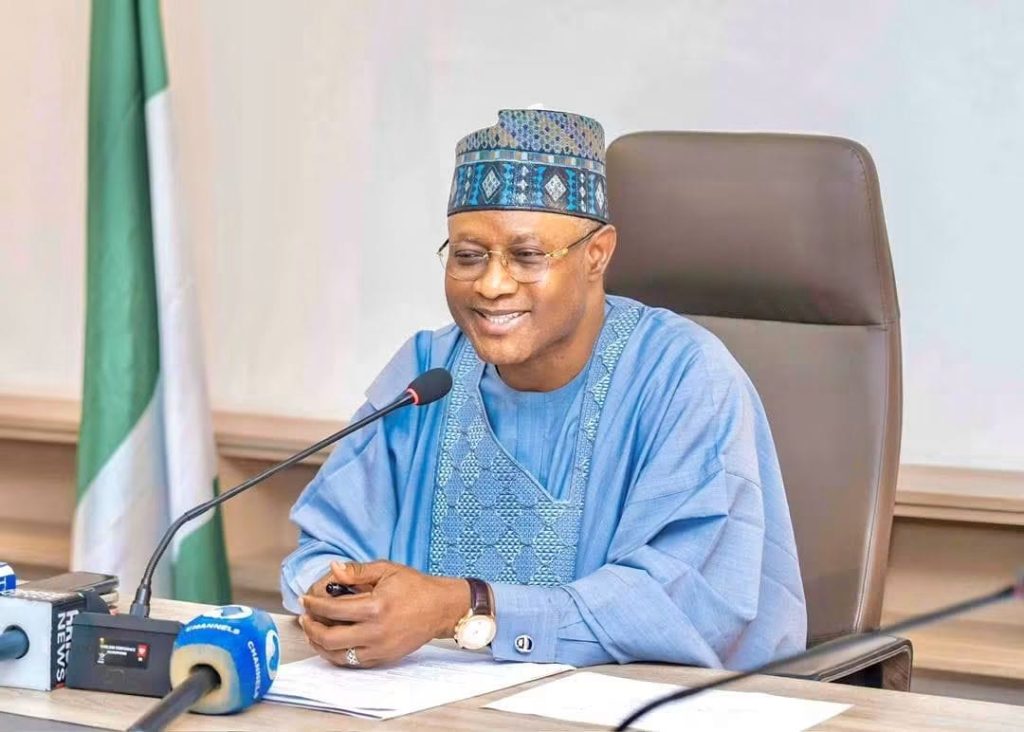
Kaduna Governor Uba Sani’s Two-Year Record of Inclusive Delivery Across All 23 LGAs Justifies a Second Term Backed by Diaspora and Grassroots Trust
Kaduna Governor Uba Sani’s Two-Year Record of Inclusive Delivery Across All 23 LGAs Justifies a Second Term Backed by Diaspora and Grassroots Trust
TipsNews Editorial
Since assuming office on May 29, 2023, Kaduna State Governor Senator Uba Sani has pursued a governance model that deliberately distributes development across every local government area rather than concentrating resources in the metropolis, and the verifiable record of infrastructure, healthcare, education, agriculture, and security delivery supports the case that his administration deserves continuity in 2027. The evidence is not confined to official government communications; independent Nigerian media, opposition-adjacent commentators, and former officials from other states have acknowledged the scale and spread of his interventions. For Kaduna Diaspora Support Services, the assessment is clear: this is a governor who has earned trust through measurable outcomes, and the electorate should return him to office to consolidate and expand an all-inclusive agenda that leaves no community behind regardless of affiliation.
The infrastructure record is the most visible pillar of the Sani administration’s rural-inclusive strategy. The Kaduna State Roads Agency (KADRA) has executed road projects deliberately sited across all 23 local government areas, including the strategic road and bridge network connecting Gadan Gayan, Gwaraji, and Maraban Kunfana, alongside the Kauru–Pambeguwa corridor . These projects are not cosmetic; they link farming communities to markets, reduce post-harvest losses, and grant security forces mobility in previously isolated areas . By mid-2026, the administration had initiated 85 road projects covering 785 kilometres, with 44 completed, and had awarded an additional 15 projects in a second phase . Crucially, Governor Sani explicitly framed this as correcting “historical injustices” suffered by rural communities, noting that Makarfi was among 12 LGAs that had not benefited from a completed road project in a decade . His statement that “Kaduna State is not only the urban city but people living in rural areas are also part of Kaduna State” reflects a governing philosophy that treats geographic equity as a prerequisite for legitimacy, not an afterthought .
The health and education sectors demonstrate comparable reach. The administration upgraded 255 Primary Healthcare Centers to Level-2 status, established 23 PHC Centres of Excellence—one in each LGA—and created 120 new neonatal corners across the state . It also renovated 19 General Hospitals and recruited 1,800 health workers as the first cohort of a five-year annual recruitment drive . In education, more than 600 classrooms were constructed, 62 new secondary schools built, and tuition fees in state tertiary institutions reduced by 50% through an executive order, with pass rates in WAEC, NECO, and NABTEB examinations rising from 54% to 67% . The out-of-school children figure dropped from approximately 550,000 to 187,720 within two years . These are not abstract promises; they are interventions with enrollment and outcome data attached.
Agriculture and economic policy have been positioned as instruments of rural wealth creation. The N74.2 billion allocated to agriculture in 2025 represented an exponential increase and pushed the sector’s budget share above 12%, making Kaduna the only subnational entity to exceed the Malabo Declaration’s 10% benchmark . Kaduna launched Nigeria’s first Special Agro-Industrial Processing Zone, with African Development Bank President Akinwumi Adesina in attendance, and is developing an Agricultural Quality Assurance Centre—the first of its kind in Northern Nigeria—to ensure produce meets export standards under the African Continental Free Trade Area framework . Internally generated revenue climbed from less than N14 billion in 2021 to more than N81 billion in 2024 through digital reforms and leakages elimination, providing fiscal headroom for these expenditures without abandoning the state’s obligations .
Security, the precondition for all other development, has shown measurable if incomplete improvement. The administration established new military bases in Giwa, Birnin Gwari, and parts of Southern Kaduna, deployed over 150 operational vehicles and 500 motorcycles to security agencies, and recovered more than 20,000 hectares of previously inaccessible farmland . Over 1,000 displaced persons were resettled with support for more than 117,000 internally displaced persons . Every local government area is now accessible, according to the governor, though he acknowledges that Birnin Gwari, Giwa, Kajuru, Chikun, and Kagarko remain areas of ongoing concern . Former Niger State Governor Mu’azu Babangida Aliyu, who endorsed Sani for a second term in November 2026, stated that “before 2023, Kaduna was known for fear, division and insecurity. Today, by the grace of God and by purposeful leadership, the state is enjoying relative peace and harmony” . Aliyu’s endorsement carries weight precisely because he is not a Kaduna indigene and has no direct political stake in the state’s internal APC dynamics.
The inclusivity dimension of Sani’s governance has attracted attention beyond partisan lines. The governor selected Jerry Adams as his 2027 running mate in what he described as a reaffirmation of “inclusion, justice, fairness and equity,” emphasizing that the choice was not about filling a slot but about ensuring every resident has a genuine sense of belonging irrespective of religion, ethnicity, or geography . The administration has maintained the longstanding Muslim-Christian power-sharing arrangement in state leadership and has integrated traditional rulers, religious leaders, women, youths, and civil society into governance channels . The Speaker of the House of Representatives, Tajudeen Abbas, commended Sani for allowing his programmes to undergo constructive scrutiny, describing the approach as evidence of democratic accountability . Leadership Newspaper named him Governor of the Year 2025 for “inclusive and reconciliatory leadership that unites people across divides,” while The Sun named him Governor of the Year 2026 .
The campaign infrastructure for 2027 is already operational and oriented toward grassroots mobilization. The APC inaugurated a 41-directorate campaign council, with Speaker Abbas charging members that “every office must have a target, every target must have a timetable. Every timetable must end at the polling unit” . The party elected 6,885 ward executives across 255 wards and 621 local government executives, creating a structure designed to reach every polling unit rather than relying on metropolitan rallies alone . Governor Sani has set a target of 70% of Kaduna’s votes for President Tinubu in 2027, framing the state’s support as reciprocation for federal interventions including four new federal universities, road projects, and N20 billion in development support . This is not merely electoral arithmetic; it reflects a governing relationship in which the state has delivered visible results and expects the electorate to validate that record.
For the Kaduna diaspora, the implications are direct. A governor who has demonstrated that development can be distributed without ethnic or religious favoritism, who has rebuilt fiscal capacity while expanding social spending, and who has maintained relative stability in a state long scarred by division represents a model worth supporting and a record worth defending. The call is not for blind loyalty but for evidence-based continuity. Kaduna Diaspora Support Services urges all indigenes and residents—regardless of party affiliation, faith, or location—to engage with the verifiable record, to hold the administration accountable for the gaps that remain, and to recognize that the alternative to continuity is not a fresh start but a disruption of gains that have already improved lives across all 23 local government areas. No community has been left out of this agenda, and no community should be asked to gamble with its progress.