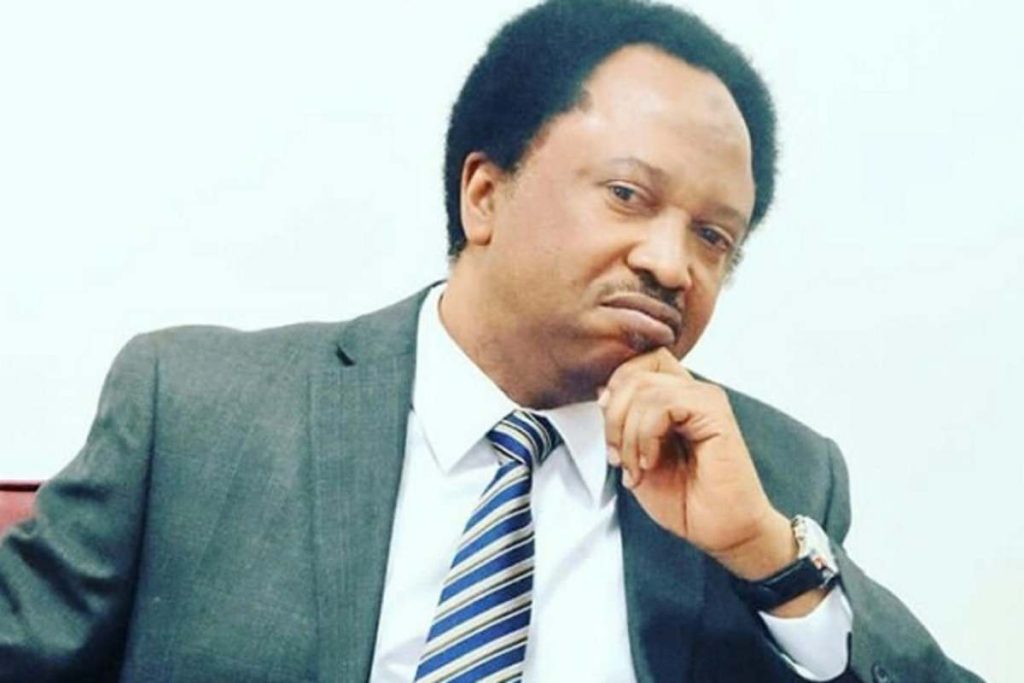
Kaduna Diaspora Support Services Endorses Shehu Sani’s 2027 Senate Bid, Citing Grassroots Trust and Cultural Engagement as Kaduna Musical Team and School Children Flourish Under Uba Sani’s Inclusive Governance
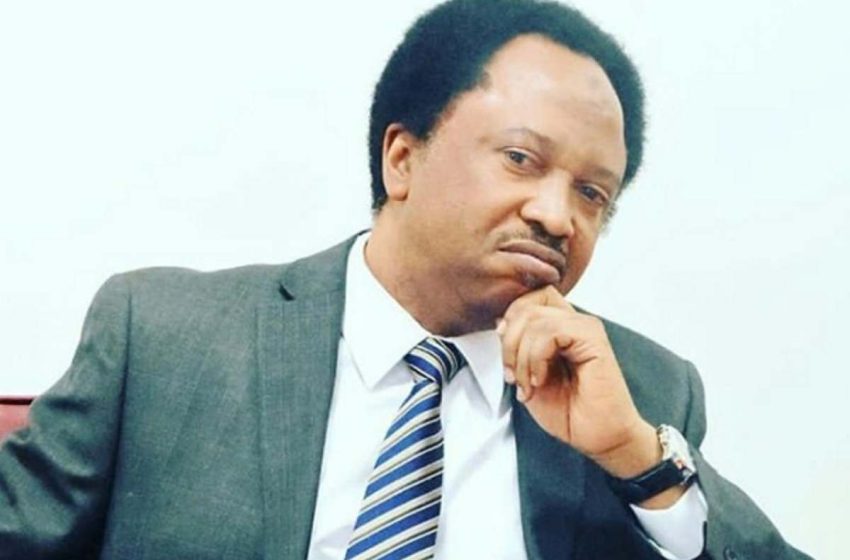
Kaduna Diaspora Support Services Endorses Shehu Sani’s 2027 Senate Bid, Citing Grassroots Trust and Cultural Engagement as Kaduna Musical Team and School Children Flourish Under Uba Sani’s Inclusive Governance
TipsNews Editorial
Kaduna Diaspora Support Services has formally joined the coalition of advocates backing Senator Shehu Sani’s return to the Senate in 2027, citing his unmatched record of grassroots engagement, his historic role in the struggle for democracy, and the overwhelming endorsements he has received from every facet of Kaduna Central society. The diaspora body also celebrates the release of a new dedicated musical tribute to Comrade Shehu Sani by the Kaduna Musical Team and Kids from Kaduna, published on YouTube on November 27, 2026, which it describes as a spontaneous cultural expression of the affection and trust that ordinary citizens—especially young people—hold for a leader who has never abandoned the grassroots orientation that defined his activism. This is not sentiment alone; it is a verdict grounded in verifiable endorsements, constituency projects, and the palpable desire of citizens across all walks of life to see a proven advocate return to the Red Chamber.
The musical tribute, titled “Dedicated Music to Comrade Shehu Sani by The Kaduna Musical Team and Kids from Kaduna,” was published on November 27, 2026, and features performances by school children and local musicians from across Kaduna State. The video’s very existence—produced not by a political campaign but by community artists and young students—illustrates the depth of voluntary support for Sani that cannot be manufactured by any campaign machinery. KDSS views this cultural production as evidence that Sani’s appeal transcends partisan politics and resonates with the generation whose future he has consistently championed. The participation of children, in particular, speaks to a legacy that parents and communities wish to pass on: a politics of courage, accountability, and service to the common man.
The evidence of Shehu Sani’s standing among the electorate is not anecdotal. In May 2026, all seven local government chairmen of Kaduna Central—representing Chikun, Kaduna North, Kaduna South, Igabi, Birnin Gwari, Ikara, and Kajuru—joined APC stakeholders in formally endorsing him as their preferred candidate for the 2027 Senate election. The Commissioner for Local Government and Chieftaincy Affairs, Sadiq Mamman Lagos, stated that the decision reflected “a collective position rather than an individual choice,” emphasizing that Sani was chosen because he is a candidate “the APC can nominate, get the ticket, contest and win.” The Commissioner for Information and Culture, Ahmed Maiyaki, underscored the synergy argument: “With Uba Sani as governor, and if Shehu Sani is elected senator for Kaduna Central, there would be faster development across the entire state.” This is not distant elite maneuvering; it is the institutional endorsement of the very local government structures closest to the people.
The religious and community leadership have followed suit. In November 2026, the Christian Association of Nigeria (CAN) in Chikun Local Government Area urged Christian leaders and residents to support Sani’s 2027 bid, with the CAN chairman describing the former senator as “the first politician to approach the Christian community for such an engagement.” The meeting, held at Sabo Tasha with 48 zonal leaders, was not merely a courtesy call; it was an opportunity for the community to communicate its concerns—including the reinstatement of traditional rulers removed under the previous administration and the upgrade of the Sa Gbagyi traditional stool—directly to a leader they trust to act on their behalf. Sani’s response, urging pastors to rise above religious and ethnic sentiments and to reject “selective empathy” in responding to insecurity, reflects the inclusive politics he has practiced since his days as a civil rights activist.
The tangible record of Shehu Sani’s previous tenure in the Senate (2015–2019) reinforces why these endorsements are based on demonstrated performance rather than rhetoric. The Confederation of APC Support Groups, which consulted across all seven local government areas of Kaduna Central, cited his facilitation of primary healthcare centres in rural communities, over 200 solar-powered boreholes and hand-pump wells in Birnin Gwari, Chikun, and Kajuru, solar streetlights across multiple wards, and classroom renovations in public schools. The group also highlighted his support for local vigilante groups in banditry-prone areas such as Birnin Gwari and Giwa with patrol vehicles and communication equipment, alongside empowerment programmes distributing sewing machines, grinding machines, and motorcycles to youths and women, and welfare support for widows, orphans, and internally displaced persons. In his own words during a 2026 interview, Sani stated: “The last time I was in the National Assembly, we were able to make an impact on the lives of the people here. Within four years, I was able to construct about seven to eight primary healthcare centres in Kaduna State.”
Perhaps the most resonant proof of Sani’s accessibility is the simple fact that, as the brief notes, “everyone wants to meet him, yet his doors have been open.” This is consistent with his decades-long record as a human rights campaigner who was detained over twenty times, including four years in prison, for opposing military rule. The same man who rejected a $350 million World Bank loan on the grounds that it would “trap future generations in a mountain of debt,” and who became the first Nigerian senator to publicly declare his assets, has never abandoned the grassroots orientation that defined his activism. The APC support groups captured this sentiment precisely: “We are not just supporting a candidate; we are supporting a legacy of activism, accountability, and grassroots representation.”
The Kaduna Musical Team and the school children whose performances have drawn praise from the diaspora are not incidental beneficiaries of this political moment. They represent the cultural and human dimension of governance that is often overlooked in policy debates. Under Governor Uba Sani’s administration, which Shehu Sani has consistently and publicly supported—citing road projects, the establishment of four federal universities in Kaduna, the appointment of three ministers from the state, and efforts to promote religious harmony between Muslims and Christians—the environment for youth expression and cultural celebration has improved. Sani’s own words at the APC campaign flag-off in November 2026 are instructive: he urged “traders, civil servants, teachers, the poor and the wealthy to mobilise support for Tinubu and Uba Sani,” framing the election as a choice between continued delivery and a return to the failures of past administrations.
Kaduna Diaspora Support Services recognizes that the enthusiasm for Shehu Sani is not manufactured. It is the accumulated trust of constituents who remember the healthcare centres, the boreholes, the scholarships—including the sponsorship of 20 students to the University of Khartoum and support for over 2,500 students under his special scholarship programme—and the relentless advocacy for accountability in public finance. It is the trust of CAN leaders who see in him a politician who approaches them before elections, not after. It is the trust of local government chairmen who understand that a senator aligned with the governor can deliver more for their communities than one in perpetual opposition. And it is the trust of the children and musicians who, without any prompting from campaign offices, chose to compose and perform a song in his honor.
The 2027 election is not merely a contest for a Senate seat; it is an opportunity to consolidate a partnership between Governor Uba Sani’s state-level delivery and Shehu Sani’s federal-level advocacy. The diaspora body urges every resident of Kaduna Central—in Kaduna North, Kaduna South, Chikun, Igabi, Birnin Gwari, Ikara, and Kajuru—to register, to verify their voter status, and to turn out for a candidate whose record is documented, whose doors are open, and whose return would amplify the voice of the common man in the Red Chamber. The landslide the brief anticipates is not a foregone conclusion; it is a responsibility. Kaduna Diaspora Support Services stands ready to mobilize, to educate, and to advocate, because the stakes for Kaduna Central and for Kaduna State are too high for complacency.