Zambia Decides 2026: Key Issues, Candidates, and Why the General Election Matters
Zambia Decides 2026: Key Issues, Candidates, and Why the General Election Matters
Economic Reforms, Critical Minerals, Democratic Institutions, and Public Priorities Shape One of Southern Africa’s Most Closely Watched Elections
By TipsNews International Editorial Board
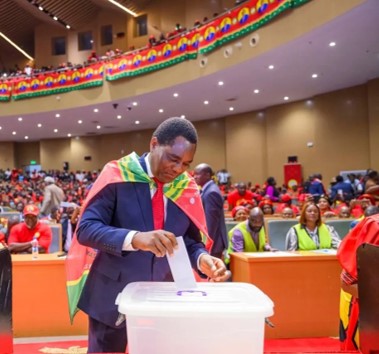
LUSAKA, Zambia — Zambia is preparing for one of the most consequential democratic exercises in its modern history as eligible voters head to the polls to elect a President, Members of Parliament, and local government representatives. The election is attracting widespread attention across Africa and internationally because of Zambia’s democratic tradition, strategic importance in global critical minerals supply chains, and its role as one of Southern Africa’s fastest-evolving economies.
For millions of Zambians, the election presents an opportunity to determine the country’s political and economic direction for the next five years. For investors, regional partners, development institutions, and international observers, it is a significant test of democratic governance and policy continuity in one of Africa’s leading mining economies.
Zambia’s Democratic Journey
Since gaining independence in 1964, Zambia has built a reputation for constitutional governance and peaceful transfers of power. The country’s democratic institutions have evolved through successive elections and political transitions.
Presidents of the Republic of Zambia include:
- Dr. Kenneth David Kaunda (1964–1991)
- Frederick Jacob Titus Chiluba (1991–2002)
- Levy Patrick Mwanawasa (2002–2008)
- Rupiah Bwezani Banda (2008–2011)
- Michael Chilufya Sata (2011–2014)
- Edgar Chagwa Lungu (2015–2021)
- President Hakainde Hichilema (2021–Present)
Each administration has contributed to Zambia’s development while facing different economic, political, and social challenges.
President Hakainde Hichilema’s First-Term Record
President Hakainde Hichilema assumed office in 2021 after winning a competitive election. His administration inherited significant economic challenges, including high public debt, fiscal pressures, and the need to rebuild investor confidence.
Supporters of the administration point to several achievements during the first term, including:
- Progress in sovereign debt restructuring.
- Renewed engagement with international financial institutions.
- Increased investment commitments, particularly in mining.
- Expansion of free public education.
- Recruitment of teachers and health workers.
- Public financial management reforms.
- Continued promotion of agriculture and private-sector investment.
- Efforts to improve Zambia’s international partnerships and diplomatic engagement.
The administration has also promoted Zambia as a destination for mining investment, particularly in copper and other critical minerals essential to the global energy transition.
Challenges Raised During the First Term
Like previous administrations, President Hichilema’s government has faced criticism and ongoing policy challenges.
Issues frequently raised during the campaign include:
- Cost of living.
- Employment opportunities, particularly for young people.
- Electricity supply and energy reliability.
- Inflation and household purchasing power.
- Infrastructure development.
- Public service delivery.
These issues have featured prominently in campaign messaging from both the governing party and opposition candidates.
The Opposition and Electoral Competition
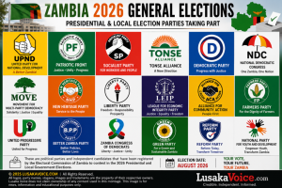
The election includes multiple presidential candidates representing different political parties and independent platforms.
Opposition candidates have campaigned on issues including:
- Economic affordability.
- Job creation.
- Governance and accountability.
- Social protection.
- Public service delivery.
- Constitutional and institutional reforms.
The diversity of candidates reflects Zambia’s multi-party democratic system. As in previous elections, the outcome will depend on voter participation and the official counting of ballots.
What Will Influence Voters?
Political analysts have identified several factors that may shape voter decisions:
- Perceptions of economic performance.
- Household cost-of-living experiences.
- Employment prospects.
- Agricultural productivity.
- Access to education and healthcare.
- Infrastructure improvements.
- Governance and accountability.
- Leadership and policy priorities.
Voting patterns can vary across provinces and communities, making nationwide predictions inherently uncertain.
Zambia’s Strategic Importance
Beyond domestic politics, Zambia occupies an increasingly important position in regional and global affairs.
The country is:
- One of Africa’s leading copper producers.
- Rich in critical minerals needed for renewable energy technologies.
- A member of the Southern African Development Community (SADC).
- A member of the Common Market for Eastern and Southern Africa (COMESA).
- A strategic trade corridor connecting several neighboring countries.
These factors contribute to sustained international interest in Zambia’s economic and political stability.
International Observers and Election Integrity
International and regional observer missions have traditionally monitored Zambian elections to assess the conduct of the electoral process. Their role is not to determine the election’s outcome but to observe and report on whether the process aligns with applicable electoral laws and internationally recognized democratic principles.
Observer missions commonly evaluate:
- Campaign environment.
- Voter participation.
- Accessibility of polling stations.
- Election administration.
- Ballot security.
- Vote counting procedures.
- Transparency in result management.
- Peacefulness of the electoral process.
The credibility of the election will ultimately be determined through Zambia’s legal and constitutional institutions, including the Electoral Commission and, where applicable, the courts.
Why This Election Matters
The significance of Zambia’s 2026 election extends beyond politics.
The outcome may influence:
- Economic policy implementation.
- Mining sector development.
- Infrastructure investment.
- Agricultural modernization.
- Foreign direct investment.
- Regional economic cooperation.
- Youth employment initiatives.
- Social service delivery.
Regardless of which candidate prevails, the election presents an opportunity for citizens to shape the country’s future through democratic participation.
TipsNews International’s Engagement with Zambia
TipsNews International first expanded its engagement with Zambia during participation in the International Business Exchange (IBEx), facilitated through the Zambia Diaspora Chamber of Commerce in America. That experience provided valuable opportunities to engage with public officials, entrepreneurs, business leaders, and members of civil society while gaining deeper insight into Zambia’s investment landscape and development priorities.
Building on that engagement, TipsNews International has continued strengthening its reporting network in Zambia. Our correspondent, Francis Mwiinga Maingaila., provides ongoing coverage of governance, business, innovation, investment, culture, and community development, supporting our commitment to factual, balanced, and independent journalism.
Editorial Perspective
Democratic elections are ultimately decided by voters through the constitutional process. Public debate, campaign promises, policy records, and political analysis all contribute to informed discussion, but they do not determine the outcome.
As Zambians cast their ballots, they will evaluate competing visions for the country’s future based on their own experiences, priorities, and expectations.
TipsNews International encourages peaceful participation, respect for the rule of law, and confidence in Zambia’s constitutional institutions. A transparent, peaceful, and credible electoral process will continue to strengthen Zambia’s democratic reputation and contribute to stability, economic confidence, and regional cooperation.
The decision now rests with the people of Zambia.
About TipsNews International
TipsNews International is an independent digital media organization committed to factual reporting, public-interest journalism, and coverage of governance, business, diplomacy, technology, investment, and sustainable development across Africa and the global diaspora.