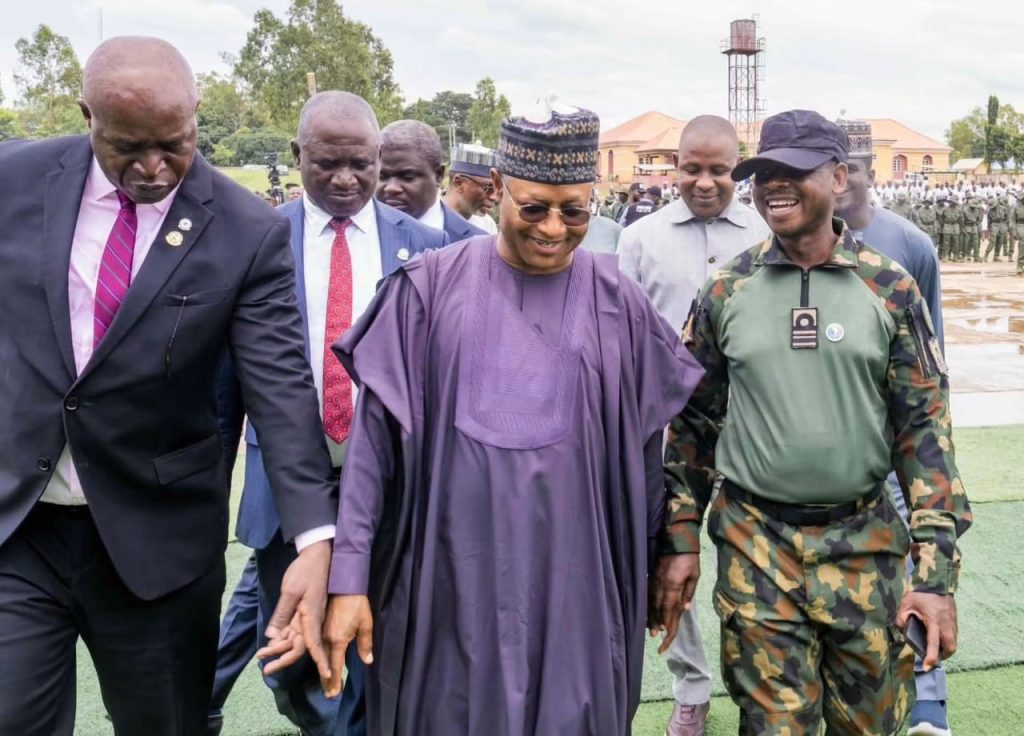
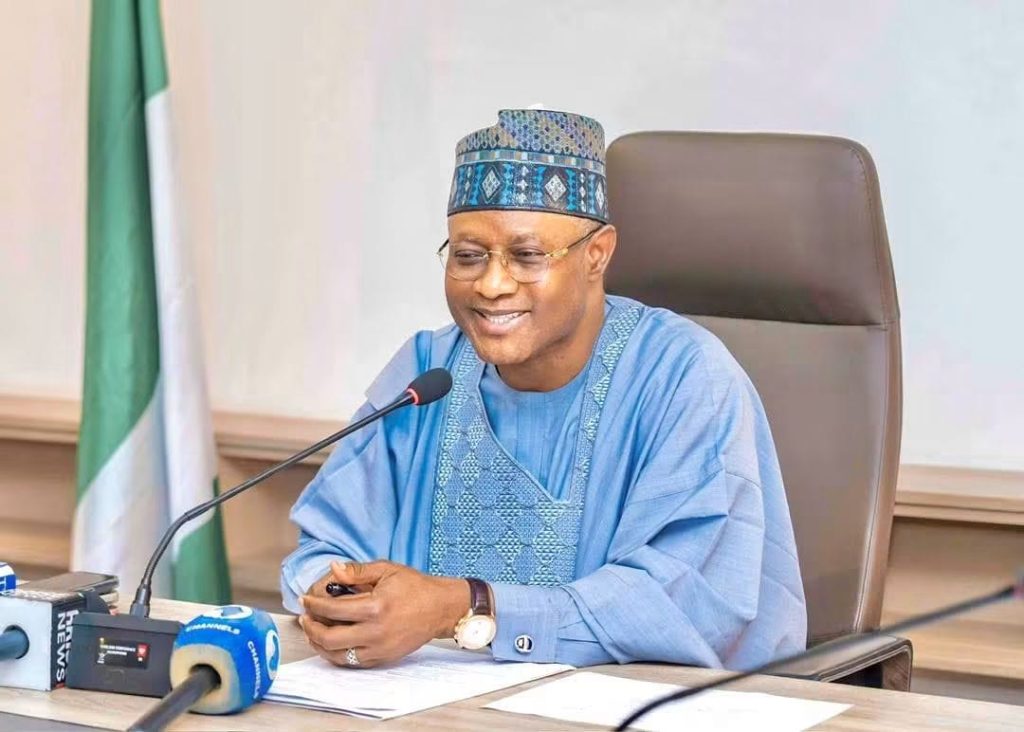
Ten (10) REASONS WHY SENATOR DR. UBA SANI, CON, IS STRONGLY POSITIONED FOR RE-ELECTION IN 2027
Ten (10) REASONS WHY SENATOR DR. UBA SANI, CON, IS STRONGLY POSITIONED FOR RE-ELECTION IN 2027
By Ben SD Kure
Managing Director & Chief Executive Officer, Kaduna State Media Corporation (KSMC)
As the 2027 general elections draw nearer, the real contest in Kaduna State is not being fought on campaign podiums or in social media echo chambers. It is being decided through governance, delivery, and strategic alignment. Governor Senator Dr. Uba Sani, CON, is not merely seeking re-election — he is consolidating a leadership model where performance meets political foresight, and where trust translates into political capital.
Re-election is never automatic. But it becomes increasingly predictable when governance delivers visible results, and those results evolve into enduring public confidence. Across Kaduna State today, multiple indicators point toward a strong re-election trajectory. Here are ten compelling reasons why Governor Uba Sani is strongly positioned for victory in 2027.
https://www.tipsnews.info/tag/uba-sani/
1. Unprecedented Infrastructure Turnaround
Governor Uba Sani’s administration has prioritised infrastructure as a tool for economic growth and social integration. With over 150 road projects spanning more than 1,450 kilometres across all 23 local government areas, the state is witnessing improved connectivity that was unimaginable just a few years ago. In July 2026 alone, the governor commissioned five township roads in Kwoi, breaking a 20-year jinx in Jaba Local Government. Infrastructure is not just development — it is visible, tangible evidence of governance that every citizen can see and feel.
2. Strategic Federal Alignment Delivering Transformative Projects
One of the strongest pillars of Governor Uba Sani’s political capital is his effective alignment with the Federal Government under President Bola Ahmed Tinubu. This alignment has attracted transformative federal projects to Kaduna, including the Kaduna Light Rail Project valued at approximately ₦1 trillion, designed to cover a 50-kilometre metropolitan network that will revolutionise urban transportation. Contractors have already been mobilised, and work is set to commence within the next two months. Also approved is the critical reconstruction of the Mando–Kaduna–Birnin Gwari Road, a 122-kilometre strategic corridor valued at ₦178 billion. These are not promises — they are funded, approved projects moving toward execution.
3. Expansion of Federal Institutions in Southern Kaduna
The siting of key federal institutions in Southern Kaduna represents a major political and developmental milestone. The Federal University of Applied Sciences, Kachia — established in 2025 as Nigeria’s first university of its kind — stands as a transformative initiative that will bring immense benefits to the state. Complementing this is the Federal Medical Centre, Kafanchan, a tertiary healthcare facility created to serve the Middle Belt region. These institutions address long-standing demands for inclusion and equity in federal presence, strengthening trust and loyalty in a region historically sensitive to marginalisation.
4. Rural Transformation Through Agriculture
With over 1,500 trucks of free fertiliser distributed across three consecutive years, Governor Uba Sani has empowered rural communities, boosted productivity, and strengthened grassroots economic stability. In July 2026 alone, the governor flagged off the distribution of 500 trucks of free fertilisers and tractors to 150,000 smallholder farmers. He refused to sell at subsidised rates, insisting on free distribution to ensure that the most vulnerable farmers benefit directly. In a largely agrarian state where over 60-80% of the active workforce is employed in agriculture, this translates directly into electoral advantage. The state has also committed over ₦100 billion to agriculture and food security in the 2026 budget, making Kaduna the first subnational government in Nigeria to surpass the 10 percent Malabo Declaration benchmark on agricultural financing.
5. Healthcare Expansion and Accessibility
Beyond federal projects, the state government has renovated, equipped, and upgraded all 255 Primary Healthcare Centres to Level 2 status. Governor Sani has expanded access to maternal, newborn, child, and adolescent healthcare services, strengthened routine immunisation, and enhanced disease surveillance. A 300-bed specialist hospital — abandoned for 16 years — has been completed and operationalised. Healthcare delivery builds emotional connection with voters because it touches lives directly, and no administration in Kaduna’s history has achieved this level of primary healthcare transformation.
6. Education Reform and Human Capital Development
Efforts to reduce out-of-school children and expand access to education are reshaping Kaduna’s future. The administration has constructed 736 classrooms, recruited 10,000 teachers, and restored over 500,000 hectares of farmland. Tuition fees in state-owned tertiary institutions have been reduced by 40-50% — a direct response to the economic burden on families. Education is not only social investment — it is political stability. A government that invests in the future earns long-term legitimacy.
7. Peacebuilding and Security Stabilisation
Kaduna has witnessed improved stability through deliberate peacebuilding efforts, dialogue, and inclusive governance. Governor Uba Sani inaugurated a Disarmament, Demobilisation, and Reintegration (DDR) Committee to strengthen non-kinetic responses to insecurity. The Kaduna Peace Model — a home-grown, community-driven approach — has drastically scaled down the twin security challenges of banditry and kidnapping. The model recognises insecurity as a symptom of deeper structural challenges such as poverty, exclusion, lack of education, and limited economic opportunity. Security is perhaps the most powerful form of political capital, because it restores normal life and enables all other forms of development.
8. Bridge-Building Across Religious and Ethnic Lines
Governor Uba Sani has adopted a governance style rooted in inclusion rather than division. His administration has consciously reduced religious and ethnic tensions, fostering a sense of shared ownership among citizens. In August 2026, both Islamic and Christian clerics declared Governor Uba Sani a “promise keeper,” applauding him for fulfilling electoral mandates. In Kaduna, unity is not just an ideal — it is a strategy for sustainable governance.
9. Strategic Religious Balance in Leadership
The adoption of a Christian Deputy Governor — Comrade Jerry Adams — stands as one of the most significant political decisions of the administration. It signals inclusion, respect, and balance. More importantly, it builds trust across divides. This is not symbolic politics — it is strategic coalition-building ahead of 2027. The Southern Kaduna APC Elders Forum has declared its full support for the re-election of President Tinubu and Governor Uba Sani, while a Southern Kaduna group has vowed to embark on an issue-based campaign for the Uba Sani–Jerry Adams joint ticket.
10. Strong Political Structure and Grassroots Reach
With experience as a former Senator and now Governor, Senator Dr. Uba Sani commands a well-established political network across wards, local government areas, and key stakeholders. The overwhelming affirmation of 459,393 votes secured at the APC primary election stands as a remarkable political statement — one that reflects growing public confidence in his leadership. Elections are not won on social media — they are won at polling units. Structure remains king, and Governor Uba Sani has built one of the most formidable political structures in Northern Nigeria.
Conclusion: From Governance to Electoral Predictability
The pathway to re-election is not built during campaigns — it is built during governance. Governor Uba Sani’s political strength heading into 2027 rests on a powerful combination of tangible infrastructure delivery, strategic federal collaboration, inclusive governance, regional balance, and strong grassroots structure.
Today, even his harshest critics agree that Kaduna is better off today than it was three years ago. Governor Uba Sani’s calm and level-headed leadership has turned the state away from years of drift and placed it firmly on the path of progress. In less than three years, he has demonstrated that governance can deliver results when leadership is focused, strategic, and inclusive.
Kaduna is not merely preparing for another election cycle. It is consolidating a model where performance meets alignment, and alignment produces results. In such a scenario, re-election is no longer a matter of speculation — it becomes a matter of probability. And in Kaduna today, that probability is increasingly clear.
Governor Uba Sani deserves the resounding support of Kaduna people for a second term.
This article is part of TipsNews International’s ongoing coverage of governance and development in Nigeria.
Call to Action: 👍 Like | 💬 Comment | 🔄 Share | 🔔 Follow TipsNews International
© 2026 TipsNews International & Kaduna State Media Corporation (KSMC). All Rights Reserved.