How America’s Monetary Policy Crisis Threatens the World — And What You Must Do Now
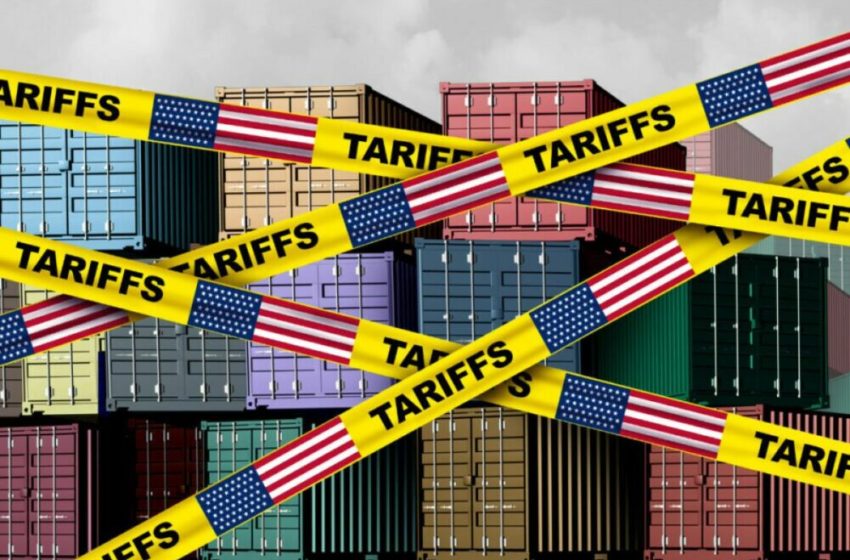
How America’s Monetary Policy Crisis Threatens the World — And What You Must Do Now
By Francis Fagjot John, PhD | EDITOR & PUBLISHER, TipsNews.info
Global Editorial — August 21, 2026
EXECUTIVE SUMMARY: A World on the Edge
The United States stands at a precarious crossroads. The Federal Reserve, under newly appointed Chairman Kevin Warsh, has fundamentally altered how the world’s most powerful central bank communicates and operates — and the consequences are rippling across every continent, every market, and every household. With the 30-year Treasury yield touching 5.33% — its highest level since 2007, just before the global financial crisis — and inflation stubbornly hovering at 3.4% against a 2% target, the implications are profound.
This is not merely an American story. This is a global editorial that demands the attention of at least 10 percent of the world’s population. The decisions made in Washington over the coming months will determine whether we navigate toward stability or stumble into a crisis of our own making.
PART I: IMPLICATIONS — How This Affects Allies and the World
The Transatlantic Rift
The open split between the United States and its closest allies represents what economists are calling “seismic changes” in the global economic order. The transition from U.S.-led globalization to what some describe as an “unruly new order” is already costing the global economy up to $307 billion annually, according to the World Economic Forum.
European allies, the United Kingdom, Japan, and South Korea — nations that have depended on American leadership for decades — are now reassessing their relationships with Washington. President Trump’s recent threats to impose tariffs on European allies who opposed his Greenland acquisition plan put nearly $1 trillion in transatlantic trade at risk.
“Something fundamental has shifted,” Neil Shearing, chief economist for Capital Economics in London, told The Washington Post. “It’s about power, dependency and coercion. There will be an effort to reduce strategic dependency on the United States.”
The Global Debt Crisis
America’s fiscal trajectory has become alarming. The federal government’s total debt has surpassed $40 trillion**, with annual fiscal deficits approaching $2 trillion. Annual net interest payments on the national debt have now exceeded defense spending for the first time in history. Just servicing the nearly $40 trillion in Treasury debt cost the government roughly **$1.2 trillion this year alone.
For the rest of the world, this means:
- Higher borrowing costs as global yields rise in lockstep with U.S. Treasuries
- Currency volatility as the dollar’s role as the world’s reserve currency comes under scrutiny
- Capital flight from emerging markets as investors chase higher U.S. yields
- Supply chain disruptions as nations prioritize resilience over efficiency
- Synchronized inflation – WEF estimates current fragmentation policies add 0.2 to 0.3 percentage points to global inflation
Global long-term yields have surged across developed economies — Japan, Germany, France, and the United Kingdom have all seen their 10-year yields rise in tandem with U.S. benchmarks. This synchronized repricing of global risk represents the most significant shift in global capital markets since 2008.
PART II: THE LEARNING CURVE — Understanding What’s Happening
The Fed’s Radical Pivot
Kevin Warsh, sworn in as Fed Chair on May 22, 2026, has implemented the most dramatic shift in central bank communication in a generation. The changes include:
- Elimination of forward guidance — The Fed no longer signals where rates are heading
- Shorter policy statements — Gone are the detailed explanations of economic conditions
- Removal of the “dot plot” — The famous interest rate projections have been abandoned
- Reduced press conferences — Less centralized communication from the Chair
Warsh’s rationale? He argues that markets have become “too dependent on central bank guidance” and should instead “pay more attention to economic fundamentals.” He believes that eliminating forward guidance allows markets to price their own views, giving the Fed “purer” economic signals.
At his July 29 press conference, Warsh flatly refused to answer any questions about the specific triggers for future rate hikes, stating: “Financial market prices are probably the most important source of information available to guide central bankers. But that is only true when all financial markets are doing is reflecting what we have said. When we ignore the most important source of information, we are doing ourselves a disservice.”
The Credibility Problem
The problem, according to leading economists, is that this approach is dangerous.
Jan Hatzius, Goldman Sachs’ chief economist, warns that Warsh’s opaque communication style will “stir up market ‘cacophony.'” He argues: “Market pricing reflects what they think the Fed will do, not what they think the Fed should do. Even if the Fed deliberately obscures its policy reaction function, this will not change.”
Mark Zandi, chief economist at Moody’s Analytics, has identified “the possibility of a significant policy mistake by the Fed” as a new threat to the U.S. economy. He warns: “Investors will have to continue guessing without certainty about what decisions the committee will make, and the likelihood of market expectations being repeatedly wrong will increase.” Zandi now places the probability of a recession within the next 12 months at 40% — well above the normal baseline of 15%.
Bank of America has gone further, warning that Warsh’s Fed strategy “works like a tax on the economy.”
Bill Dudley, former President of the New York Fed, added his voice to the growing chorus of concern in a column for Mint: “Eliminating forward guidance makes sense, but deliberately obscuring the Fed’s policy reaction function — how it adjusts rates in response to changing economic conditions — threatens its effectiveness and makes it harder for the FOMC to achieve its stated price stability objective. If the Fed does not reveal information about its reaction function, how can markets properly assess its likely response to future information?”
The Mechanics of the Crisis
To understand how we got here, one must grasp several key concepts:
Term Premium — The extra yield investors demand for holding longer-term bonds. This has surged because of uncertainty about Fed policy, not just inflation expectations.
The Bond Market Overshoot — MUFG Research argues that “the US rates market is in an overshoot mode,” meaning current yield levels are creating value — but only if one believes the Fed will eventually pivot.
The AI Boom’s Double-Edged Sword — The artificial intelligence infrastructure boom is simultaneously driving growth and crowding out traditional bond investors, as tech giants issue 20- to 40-year corporate bonds that compete with Treasuries for pension and insurance fund dollars.
The Fiscal Speed-Bump — From $39 trillion to $40 trillion took just five months (March 2026 to August 2026). The previous $1 trillion jump (from $38 trillion to $39 trillion) also took just five months (October 2025 to March 2026). The debt ceiling is now projected to be hit again when the national debt reaches **$41.1 trillion**, sometime between late winter and mid-summer of 2027.
PART III: HOW TO GUIDE AGAINST OR AVOID SUCH RISKS
For Policymakers
- Restore Forward Guidance — The Fed must reverse course and provide clear signals about its policy intentions. The current approach creates unnecessary volatility that “will not produce any constructive effect on the economy.”
- Address Fiscal Sustainability — The $40 trillion debt trajectory is unsustainable. Bipartisan Policy Center President and CEO Margaret Spellings warned: “Federal debt is already raising the cost of living, crowding out other spending and investment, and threatening our economy and the long-term prosperity of Americans. Our current fiscal path is clearly unsustainable — and that’s the best-case scenario. AI disruption, a recession, a global war, or any other event could rapidly move us from challenge to full-blown crisis.”
- Rebuild International Trust — Allies must be brought back into the fold through predictable, rules-based policy rather than ad-hoc threats and ultimatums.
For Investors
- Diversify Currency Exposure — The dollar’s dominance is being tested. Consider increasing allocations to gold, which has already risen nearly 80% over the past year as a crisis hedge.
- Shorten Duration — With long-term yields at 19-year highs, the risk of capital losses in long-duration bonds remains elevated.
- Monitor the FedWatch Tool — According to CME Group, markets currently price a 45% probability of a year-end rate hike, with 25% probability of two or more hikes. Stay informed.
- Watch Emerging Markets Closely — WEF warns that emerging markets and developing economies (EMDEs) will bear the heaviest burden from fragmentation, as their shallower capital markets make them more reliant on international capital flows and more vulnerable to reduced financial integration.
For Everyday Citizens
- Refinance Strategically — With the federal funds rate at 3.50%-3.75%, variable-rate debt remains vulnerable if hikes resume.
- Build Emergency Savings — With recession probability at 40% in Zandi’s estimation, a cash cushion is not optional — it is essential.
- Stay Informed — In an era of “opaque” Fed communication, knowledge is power. Follow credible analysis, not just headlines.
PART IV: HOW THE MAJOR PLAYERS ARE POSITIONING
The Federal Reserve
The FOMC remains divided. At the July 28-29 meeting, the committee voted 9-3 to hold rates at 3.50%-3.75%, with three regional Fed presidents dissenting in favor of a quarter-point hike. The hawks argued that a hike now “could help avoid a steeper, potentially more costly tightening later.”
Chair Warsh has shown “patience” on rates, but his dovish tone at press conferences has paradoxically pushed long-term yields higher. The market now expects the Fed to hold steady through at least October, with a possible December hike.
The Trump Administration
President Trump, who appointed Warsh, has faced a paradox. He got the Fed chair he wanted, but rates haven’t fallen as promised. Meanwhile, the administration’s “America First” policies — including aggressive tariffs, sanctions, and supply chain controls — are raising costs and reducing efficiency.
Treasury Secretary Scott Bessent has warned allies and China: “You are either with us or against us” in the campaign against Iran. This confrontational approach has alienated traditional partners and accelerated the global fragmentation that the WEF estimates costs $307 billion annually.
Global Allies
European leaders have vowed they “will not leave themselves open to such threats again.” The European Parliament has urged the development of a payment system to replace Visa and Mastercard, warning that “Donald Trump can cut them off overnight.”
Canada, France, and the United Kingdom are no longer merely “de-risking” — they are actively building alternative economic relationships. The post-WWII global order, built on American foundations, is being fundamentally reshaped.
PART V: HOW DID WE GET HERE? WERE EARLY WARNING SIGNS IGNORED?
The Warning Signs Were There
Top economists have been sounding alarms for months. Henrik Zeberg, a prominent macroeconomist, warned as early as December 2025 that “the US economy is heading in an unfavorable direction” and that the Fed “failed to recognize clear signals pointing to a severe economic downturn.”
Zeberg noted that the Fed has “more than 400 economics PhDs” yet “still missed obvious and instructive economic patterns.”
The Federal Reserve’s own November 2025 Financial Stability Report documented that “sophisticated institutional investors” were explicitly telling the central bank that a $2 trillion market operating “almost entirely outside regulatory oversight” had become their “primary concern.”
Why Were These Warnings Ignored?
- Hubris — The Fed believed its models could manage any outcome.
- Political Pressure — The administration wanted lower rates, creating incentives to downplay risks.
- Communication Breakdown — The very opacity Warsh champions made it harder to recognize and respond to emerging threats.
- Groupthink — Dissenting voices were marginalized, as evidenced by the three dissents at the July meeting.
A Pattern of Avoidable Errors
The current crisis mirrors the 2007-2008 period in disturbing ways:
- Then: Subprime mortgage risks were ignored until it was too late.
- Now: Geopolitical risks, fiscal unsustainability, and communication failures are being ignored.
The 30-year Treasury yield at 5.33% is the highest since June 2007. That is not a coincidence. That is a warning.
PART VI: IMAGE OF THE CURRENT ADMINISTRATION AND THE THOUGHT OF LOWERING INTEREST RATES
The Biden-Harris Legacy
The Biden-Harris administration inherited an economy in transition and handed over a “growing and stabilizing economy” to the Trump administration. However, the public’s perception was shaped by persistent inflation. As one analysis notes: “Biden tried to ‘persuade’ the public that ‘economic fundamentals are strong’ even when inflation was at its peak.”
The Harris campaign’s economic messaging struggled to gain traction. Voters, particularly working-class Americans, remained skeptical.
The Trump Administration’s Dilemma
President Trump faces a fundamental contradiction:
- He wants lower interest rates to stimulate growth and boost his political standing.
- But his policies — tariffs, sanctions, and geopolitical confrontations — are fueling inflation and keeping rates high.
The Fed under Warsh appears unlikely to cut rates as Trump desires. Wells Fargo Investment Institute has stated it “no longer expects US interest rate cuts in 2026 due to uncertainty surrounding inflation and increasing geopolitical risks related to the war in the Middle East.”
The Impact of Rate Cuts — If They Come
If the Fed were to cut rates in the current environment, the effects would be:
Positive:
- Lower borrowing costs for consumers and businesses.
- Relief for the $1.3 trillion in consumer credit card balances.
- Potential boost to housing and auto markets.
Negative:
- Further inflation if cuts come too early.
- Weakening of the dollar, potentially accelerating the shift away from dollar reserves.
- Loss of Fed credibility after signaling a hawkish stance.
The consensus among economists is clear: rate cuts in 2026 are increasingly unlikely. Goldman Sachs has postponed its forecast for cuts from late 2026 to 2027.
PART VII: THE FRAGMENTATION COSTS — A DEEPER DIVE
The World Economic Forum, in collaboration with Oliver Wyman, released the report “Deepening Divides: The Cost of a More Fragmented Financial System” which provides alarming granularity:
- Current fragmentation policies are estimated to raise global inflation by 0.2 to 0.3 percentage points.
- In the United States alone, low-skilled workers have seen real wages reduced by an estimated 0.33% ; mid-skilled workers by 0.49% ; and high-skilled workers by 0.66% as a direct result of geoeconomic fragmentation.
- In the most severe decoupling scenario, global GDP could lose 6.4% — equivalent to $6.9 trillion.
- Nations outside the major geopolitical blocs — predominantly emerging markets and developing economies — could suffer 10.7% output losses.
PART VIII: A GLOBAL EDITORIAL — WHY THIS MATTERS TO EVERYONE
This is not an American problem. It is a global one.
- European businesses face higher borrowing costs and trade uncertainty.
- Asian manufacturers confront supply chain disruptions and currency volatility.
- Emerging markets struggle with capital flight and debt service burdens.
- Middle Eastern economies are caught in the crossfire of U.S.-Iran tensions.
- Global consumers pay higher prices as inflation persists.
The World Economic Forum’s finding that geoeconomic fragmentation costs $307 billion annually is not an abstraction. It represents real jobs, real businesses, and real livelihoods lost.
PART IX: TIPSNEWS.INFO — OUR COMMITMENT TO TRUTH WITHOUT OVERSIGHT OR OMISSION
TipsNews.info stands as a beacon of independent journalism in an era of media consolidation and censorship. We operate without external oversight or omission, committed solely to the pursuit of truth, accuracy, and transparency.
Our editorial philosophy is simple: The public deserves the facts, unvarnished and complete. We do not bow to political pressure, corporate interests, or ideological conformity.
In an age where the Federal Reserve itself has embraced opacity, independent journalism has never been more vital. When central banks obscure their intentions and governments prioritize spin over substance, the Fourth Estate must rise to the occasion.
TipsNews.info will continue to hold power accountable — whether in Washington, Brussels, Beijing, or anywhere else.
CONCLUSION: THE ROAD AHEAD
The United States faces a choice. It can continue down the current path — with an opaque Fed, confrontational foreign policy, and unsustainable fiscal trajectory — and risk a crisis that would make 2008 look modest by comparison.
Or it can course-correct:
- Restore Fed transparency — Clear forward guidance reduces uncertainty and volatility.
- Rebuild alliances — America’s strength has always been its partnerships.
- Address fiscal reality — The $40 trillion debt cannot be ignored forever.
- Listen to warnings — The economists who predicted 2008 are warning again.
The warning signs were there. They were ignored. They must not be ignored again.
As Mark Zandi warned: “If the Fed continues with its increasingly opaque policy communication approach, one of the upcoming FOMC meetings could trigger a serious financial market selloff. Ultimately, the entire US economy could be at risk.”
The world is watching. The stakes could not be higher.
READ 5 TOP RELATED ARTICLES
To deepen your understanding of this unfolding crisis, we recommend the following independent analyses:
- “The Fed Isn’t Cutting Interest Rates Anytime Soon — and Kevin Warsh Is Putting the Blame Squarely on President Trump” — Nasdaq.com (June 25, 2026)
🔗 https://www.nasdaq.com/articles/the-fed-isnt-cutting-interest-rates-anytime-soon-and-kevin-warsh-is-putting-the-blame - “Global bond rout pushes 30-year yields to 5.33%, highest since 2007” — Edgen.tech (August 19, 2026)
🔗 https://edgen.tech/2026/08/19/global-bond-rout-pushes-30-year-yields-to-5-33-highest-since-2007 - “US National Debt Tops $40 Trillion: How It Happens” — Tempo.co (August 20, 2026)
🔗 https://en.tempo.co/read/2012345/us-national-debt-tops-40-trillion-how-it-happens - “WEF: Full East-West decoupling could cost global GDP USD 6.9 trillion” — Asianet News (June 29, 2026)
🔗 https://newsable.asianetnews.com/business/wef-full-east-west-decoupling-could-cost-global-gdp-usd-6-9-trillion-says-report - “New Fed Chair Kevin Warsh’s decision to drop forward guidance may actually empower the central bank’s other policymakers” — Fortune (June 20, 2026)
🔗 https://fortune.com/2026/06/20/kevin-warsh-fed-forward-guidance-other-policymakers