From Kansas City to Kaduna: Why Uba Sani’s Re-Election Is the Smartest Bet the Diaspora Can Make
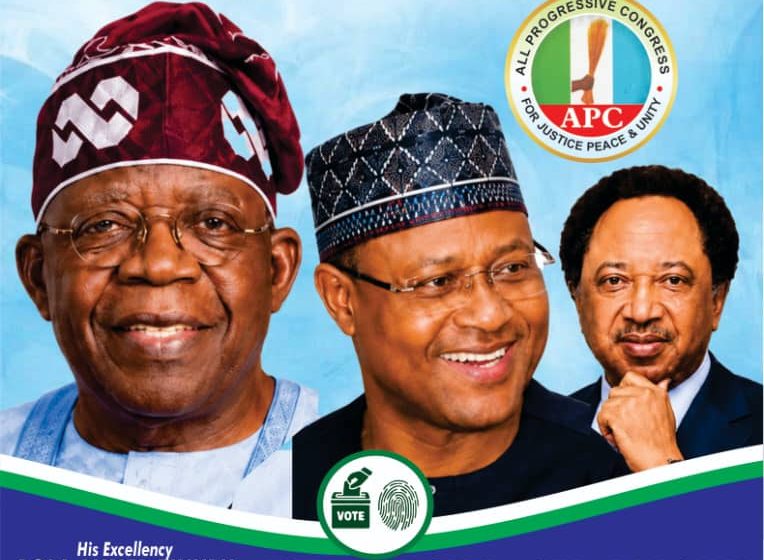
From Kansas City to Kaduna: Why Uba Sani’s Re-Election Is the Smartest Bet the Diaspora Can Make
Editorial Review
If you ask a Kaduna native in Kansas City, London, or Manchester what their hometown lacks most, the answer is rarely “money.” What’s missing is trusted intermediaries, traceable commitments, and verifiable results. That is precisely why Uba Sani re-election and diaspora trust are now inseparable questions. Over the past three years, Governor Uba Sani has been closing the trust deficit between the diaspora and home with a rare combination of moves — and 2027 is the moment that record gets tested. This is not a sycophantic press release. This is an investment logic, written from the diaspora perspective, about why Uba Sani re-election and diaspora trust deserve to be examined together rather than separately.
1. He Is Not Just Building Roads — He Is Rebuilding the Infrastructure of Trust
In October 2026, Governor Uba Sani disbursed nearly ₦2 billion in compensation to 865 property owners in Zaria. Combined with earlier rounds, his government has now paid over ₦7 billion directly to 4,865 households.
In the Nigerian context, the significance of this story far exceeds the numbers. In the past, infrastructure projects often meant “the bulldozer arrives, and you’re on your own.” Uba Sani reversed the order: compensate first, then break ground. One beneficiary in Zaria told reporters: “This is the first time the government gave us money before demolishing our houses.”
For the diaspora, this sends a critical signal: this is a government doing verifiable things. Every naira you send home, every project you support, rests on one basic premise — governance here is becoming predictable. This is the practical, measurable dimension of Uba Sani re-election and diaspora trust: trust is not declared, it is receipted.
The bigger picture: since taking office in May 2023, his administration has launched 150 road projects covering over 1,355 kilometres across all 23 local government areas. Not concentrated in Kaduna city. Not roads built only for the rich to see.
2. Grassroots Empowerment: Not a Slogan, but Naira and Solar Panels
What the diaspora is most tired of is “empowerment” reduced to a PowerPoint word. Uba Sani’s approach is clumsier but more solid.
In March 2026, his government distributed livestock intervention materials to 5,000 cooperatives: 500 solar freezers (with panels, inverters, and batteries), 300 feed crushers, 3,000 bags of poultry feed, and 200,000 day-old chicks, covering all 23 LGAs. The goal is explicit: make Kaduna the agricultural and livestock capital of Northern Nigeria.
That same month, NASENI launched a skills development centre in Kaduna, with 500 beneficiaries selected from all 23 LGAs receiving solar home systems, clean cookstoves, and financial support. This is not a Lagos or Abuja elite project — this is grassroots energy and skills empowerment in Kaduna.
Add to that the Tallafin Noma programme covering 69,000 crop farmers and a dry-season irrigation scheme targeting nearly one million smallholder farmers, and Uba Sani’s grassroots logic is clear: push resources down to the LGA level, to cooperatives, to specific people. Every one of these touchpoints strengthens Uba Sani re-election and diaspora trust, because each is a documented transaction rather than a broadcast promise.
3. Ben Kure: Finally, a “Person Who Picks Up the Phone” Between the Diaspora and Government
This is the point this article most wants to emphasise.
The diaspora’s biggest pain point has never been a lack of passion. It is a lack of interface. You have an idea — you don’t know who to call. You have resources — you don’t know who will handle them. You have a technical proposal — it disappears into some ministry’s drawer.
Hon. Ben Kure’s appointment as Commissioner for Sports Development is a structural win for the diaspora. His background — General Manager of Kaduna State Media Corporation (KSMC) — means he understands the value of communication, narrative, and external connection. And sports development is precisely the port the diaspora can most easily plug into and see real results: youth academies, facility construction, coaching exchanges, tournament sponsorship.
More critically, before this election cycle, it was Kure who carried the diaspora’s technocrat inputs directly into the Governor’s office. This is not post-hoc cake-sharing; this is pre-emptive participation. For a professional sitting in Kansas City who wants to do something for Kaduna, knowing who is inside the door to open it for you matters more than any policy document.
Kure is that interface. In concrete terms, he is the human mechanism through which Uba Sani re-election and diaspora trust move from rhetoric to routine.
4. Shehu Sani: From Kaduna Polytechnic to the Senate — A Line That Never Broke
The diaspora’s greatest fear in political engagement is “last-minute conversion.” You show up three months before an election and vanish three months after.
Sen. Shehu Sani’s relationship with the diaspora technical community is not that. From the days at Kaduna Polytechnic, through his tenure in the Senate, to his current bid for the Kaduna Central senatorial seat, this line has stayed alive. His “sincerity of purpose” is not a polite phrase — it is a traceable record: he was present even when he held no power.
For a diaspora community, you don’t just need someone who will “help after being elected.” You need someone who knew you before you had leverage. Shehu Sani fits that definition. His consistency is one of the reasons the Uba Sani re-election and diaspora trust equation has a credible second half — a Senate partner who already knows the diaspora’s file.
5. Why Re-Election in 2027 Matters Critically to the Diaspora
Let’s be blunt.
First, continuity is credibility. A one-term government resets everything that takes five or ten years to bear fruit — skills centres, agricultural value chains, diaspora investment frameworks. Uba Sani has already launched institutional things: the NASENI skills centre, the SAPZ special agro-processing zone, the AQAC quality assurance centre. These cannot be completed in one term. Re-election is the only path to turning these “works in progress” into “assets.” This is the structural case for Uba Sani re-election and diaspora trust — without continuity, the trust has nothing to attach to.
Second, the Christian community’s endorsement is not accidental. In October 2026, Kaduna Christian leaders publicly announced mobilisation of Christian voters across 19 northern states to support Uba Sani’s re-election. Their stated reasons included: the governor nominated a Christian deputy governor candidate, and established a Federal University of Applied Sciences (Kachia) and a Federal Medical Centre (Kafanchan) in Southern Kaduna. For a state long accused of “marginalisation,” this is hard evidence of inclusive governance. Southern Kaduna indigenes in the diaspora should read this signal clearly.
Third, the ADC heavyweights’ defection. At the same event where compensation was disbursed, former ADC political heavyweights — including former senators and former House members — joined the APC with thousands of followers, publicly citing the governor’s “inclusive leadership” and “people-centred compensation policy.” Political movement always involves calculation, but when the opposition’s core figures choose to stand on your side, it means you are winning not just votes — you are winning confidence.
The diaspora doesn’t need a perfect governor. We need a government that is reachable, verifiable, and accountable. Uba Sani’s governance record includes ₦7 billion in traceable compensation, a materials list for 5,000 cooperatives, 150 roads with mileage figures, and a commissioner willing to carry diaspora technical input into the Governor’s office. None of this is sentimental — but all of it can be checked. That is the entire substance of Uba Sani re-election and diaspora trust: a record you can audit, and an interface you can call.
For the Kaduna diaspora, the 2027 ballot is not about party. It is about whether you want to keep someone you can call, who picks up, and who delivers.
Ben Kure is inside the door. Shehu Sani is on the road. Uba Sani is in the office.
From Kansas City to Kaduna — this line is worth keeping.
Dr. Francis Fagjot John works on behalf of Kaduna Diaspora Support Services (KDSS) in Kansas City, Missouri, USA.