THE UNMAKING OF THE WEST: WHEN ALLIES WEAPONIZE TRADE, DOES HUMANITY HAVE A HIERARCHY?
THE UNMAKING OF THE WEST: WHEN ALLIES WEAPONIZE TRADE, DOES HUMANITY HAVE A HIERARCHY?
As London Restricts Israeli Settlement Goods and Washington Escalates a 50% Tariff War with Ottawa, Nigeria and the Global South Stand Witness to the Fracture of Western Morality and the Arbitrary Nature of Global Justice
By Francis Fagjot John, PhD, Editor/Publisher, TipsNews.info
EDITORIAL
There are inflection points in history when disparate global developments converge to illuminate a single, undeniable reality.
We are living through such a moment.
In Europe, the United Kingdom—a foundational ally of Israel—imposes unprecedented trade restrictions on West Bank settlement goods while publicly accusing Israeli authorities of “ethnic cleansing.” In retaliation, Israel closes access to Britain’s consulate in East Jerusalem, dismantling decadelong diplomatic channels.
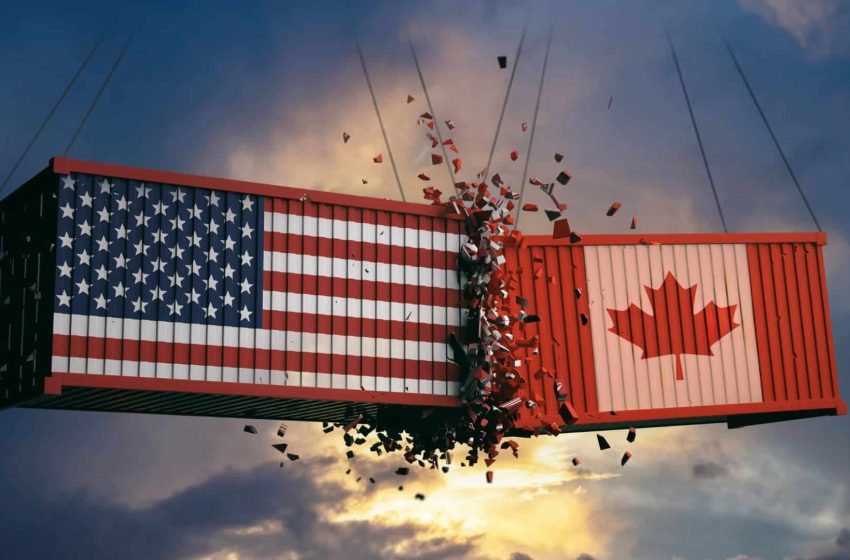
Simultaneously across the Atlantic, the world’s most integrated, peaceful, and prosperous economic border has collapsed into open conflict. Prime Minister Mark Carney’s administration in Ottawa suspended bilateral trade talks with Washington, declaring that the United States’ imposition of 50% punitive tariffs on nearly $28 billion of Canadian exports—and retaliatory dollar-for-dollar duties on American steel, dairy, and machinery—signals the end of a “true economic partnership.”
To the casual observer, these appear as isolated diplomatic breakdowns: one a Middle Eastern policy dispute, the other a North American trade skirmish.
They are not.
Together, they represent the public, unvarnished unravelling of the post-1945 rules-based international order. They expose a global architecture where treaties are honored only until they become inconvenient, where historical alliances offer zero protection against economic coercion, and where the value of human suffering remains dictated entirely by geopolitical leverage.
The Western Double Standard: From Words to Economic Coercion
For decades, Western powers issued measured statements regarding Israeli settlement expansion in the occupied West Bank. Resolutions were debated at the United Nations Security Council, concerns were expressed, and international law was meticulously cited. Yet, criticism without material consequence became a ritualized political spectacle.
Britain’s decision to move from rhetoric to economic restrictions—alongside parallel actions by France and Canada—marks a decisive shift. As reported by The New York Times, traditional allies concluded that ordinary diplomatic reprimands were no longer viable amidst accelerating settlement growth, settler violence, and rulings from the International Court of Justice.
┌────────────────────────────────────────────────────────────────────────┐
│                   THE ARCHITECTURE OF SELECTIVE URGENCY                 │
├───────────────────────────────────┬────────────────────────────────────┤
│         WESTERN DIPLOMACY         │        THE AFRICAN REALITY         │
├───────────────────────────────────┼────────────────────────────────────┤
│ • Rapid economic sanctions when   │ • Decades of systemic instability  │
│   strategic allies cross lines    │   met with statements & sympathy   │
│ • Universal human rights invoked   │ • Prolonged displacement treated   │
│   for high-visibility crises      │   as background statistical noise  │
│ • Instant mobilization of media,  │ • Structural underfunding of       │
│   diplomatic, and financial power │   regional security architecture   │
└───────────────────────────────────┴────────────────────────────────────┘
The political calculation changed: The cost of doing nothing finally outweighed the cost of confronting an ally.
Yet this calculated risk begs an inescapable question for Africa and the broader Global South:
Why are major powers willing to incur immediate political and economic friction to enforce principle in certain regions, while African lives facing prolonged terror and humanitarian catastrophe are met with endless “sympathy” and administrative paralysis?
The North American Collapse: Transactional Power Over Principle
If London’s clash with Jerusalem exposes the limits of diplomatic hypocrisy, the U.S.-Canada tariff escalation demonstrates the complete death of the “privileged ally.”
When the United States weaponizes market access—demanding terms that Prime Minister Carney noted would turn Canadian industries into “subsidiaries” or “wipe them out entirely”—it shatters an eight-decade consensus. For generations, mid-sized democracies assumed that historical alignment, shared security grids, and deep economic integration offered predictability.
Instead, Ottawa was forced to implement matching counter-tariffs on $28 billion of U.S. products, with Carney declaring that Canada is prepared to stand up to economic coercion.
The global precedent is disastrous:
- Rule of Law Replaced by Transactional Force: When the world’s wealthiest alliance abandons structural trade agreements (USMCA) for unilateral tariff spikes, it proves to developing nations that international agreements are written in pencil.
- Moral Authority Dissolved: Western nations can no longer credibly lecture emerging economies on open markets, contract enforceability, or adherence to the World Trade Organization when they turn economic weapons upon their closest historical partners.
- Alternative Architecture Accelerated: Non-aligned economic blocs—including BRICS+, ASEAN, and the African Union—are observing North American fragmentation and rapidly accelerating non-dollar trade and independent supply networks.
The Question Africa Must Ask—Without Apologizing
This analysis does not diminish the profound tragedy in the Middle East. Palestinians deserve statehood, security, protection under international law, and immediate relief from violence. Israelis deserve safety and freedom from terrorism.
Humanitarian concern is not a finite resource. Justice does not have a quota.
Supporting Palestine does not require ignoring Africa. Yet the stark contrast in global urgency remains an open wound:
- Nigeria has spent over a decade combating brutal insurgency, mass kidnappings, and rural devastation across northern territories and the Lake Chad Basin. Explore detailed reporting via TipsNews: Nigeria Security & Insecurity Analysis.
- Sudan suffers through the world’s largest internal displacement and famine crisis, as documented by the UN Refugee Agency (UNHCR).
- The Democratic Republic of Congo endures decades of resource-driven conflict resulting in millions of lives lost, yet struggles for fraction of the airtime given to European or Middle Eastern conflicts.
                  ┌────────────────────────────────────────┐
                  │      DOES HUMANITY HAVE A HIERARCHY?   │
                  └───────────────────┬────────────────────┘
                                      │
          ┌───────────────────────────┼───────────────────────────┐
          ▼                           ▼                           ▼
┌───────────────────┐       ┌───────────────────┐       ┌───────────────────┐
│  GEOGRAPHY OF     │       │   THE RATING      │       │  NATIONAL         │
│  COMPASSION       │       │   SYSTEM          │       │  RESPONSIBILITY   │
│ Does strategic    │       │ Are some victims  │       │ Can Africa rely   │
│ utility dictate   │       │ prioritized over  │       │ on international  │
│ global response?  │       │ others by power?  │       │ partners?         │
└───────────────────┘       └───────────────────┘       └───────────────────┘
The answer to whether some human beings are deemed more important than others must morally be NO.
A child in Gaza matters. A child in Tel Aviv matters. A child in Kaduna, Maiduguri, Khartoum, or Goma matters equally. Humanity must not operate on a hierarchy.
The Diaspora & The Self-Reliance Imperative
Millions of Nigerians across the diaspora—living, working, and building businesses in Britain, North America, and Europe—watch these geopolitical games with clear eyes. Read more on Nigerian Diaspora Affairs & Global Contributions.
They know that Nigeria and Africa do not need sympathy, rhetoric, or Western paternalism. Nigeria is a sovereign powerhouse that must ultimately build its own security and industrial capacity.
However, true global partnership requires measurable support rather than performative diplomacy:
- Direct Intelligence & Counterterrorism Infrastructure
- Financial Crime Enforcement & Anti-Money Laundering Tracking
- Targeted Technology & Border Security Integration
Simultaneously, Africa must look in the mirror. African institutions cannot wait for international permission or foreign intervention to resolve regional crises. The African Union and regional bodies must unify their diplomatic leverage, eliminate institutional corruption, and fund their own defense architectures. Partnership must complement national responsibility—never replace it.
The Article of the Year Conclusion: The World Beyond Tariffs and Treaties
The trade war between Washington and Ottawa and the diplomatic standoff between London and Jerusalem are not passing headlines—they are structural evidence of a world in transition.
When the architects of the post-WWII international order turn on one another, weaponize trade, and selectively enforce international law, the illusion of a universal, rules-based Western hierarchy vanishes.
The central message of this editorial stands as a definitive benchmark for global politics:
Humanity must not have a ranking system.
Justice must not have a geographical preference.
And compassion must never become a political privilege reserved for the strategically useful.
Whether in London, Washington, Ottawa, Abuja, or Jerusalem, the future of global justice depends on whether the world continues to tolerate a hierarchy of human worth—or finally builds a system where every human life commands equal outrage, equal protection, and equal dignity.
Primary External Links:
- The New York Times – Allies Ban Settlement Goods
- UNHCR – UN Refugee Agency Data on Africa Crises
- African Union Official Portal
- International Court of Justice Decisions
#ArticleOfTheYear #TipsNews #GlobalJustice #USCanadaTradeWar #UKIsrael #Palestine #Nigeria #AfricanLivesMatter