BRITAIN, ISRAEL, PALESTINE AND THE QUESTION AFRICA MUST ASK: DOES HUMANITY HAVE A HIERARCHY?
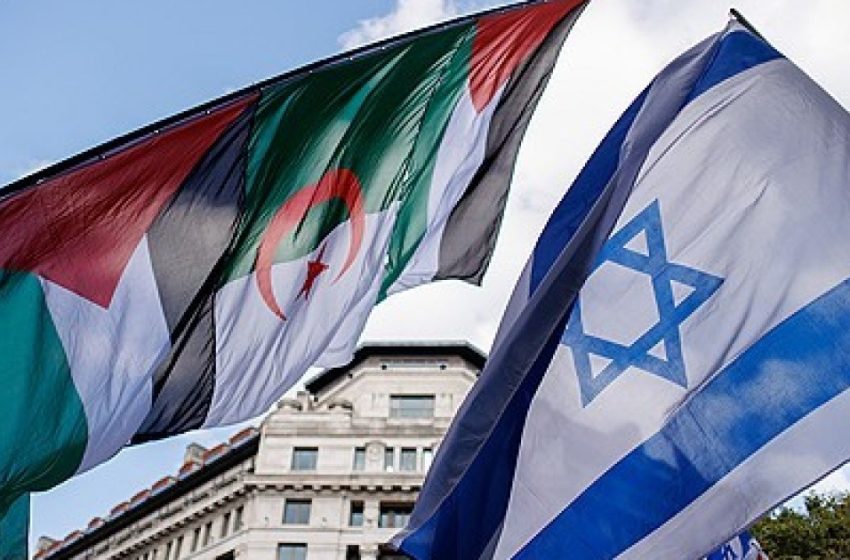
BRITAIN, ISRAEL, PALESTINE AND THE QUESTION AFRICA MUST ASK: DOES HUMANITY HAVE A HIERARCHY?
As London Bans Trade With Israeli Settlements and Israel Retaliates, Nigeria and Africa Have a Right to Question the Unequal Urgency of Global Humanitarian Politics
By Francis Fagjot John, PhD, Editor/Publisher, TipsNews.info
EDITORIAL
There are moments in international politics when a single decision reveals much more than the issue immediately before the world.
Britain’s decision to ban trade involving goods from Israeli settlements in the occupied West Bank is one such moment. It is not simply about dates, wine, agricultural products, or settlement commerce. It is not merely another disagreement between London and Jerusalem. It is not even only about Palestine.
It has become a larger test of international morality.
When the United Kingdom—a historic ally of Israel—decides to impose restrictions on settlement trade and publicly raises concerns about what Foreign Secretary Ed Miliband described as the ethnic cleansing of Palestinians in parts of the West Bank, the world is forced to ask:
What has changed?
And why does some human suffering appear capable of generating extraordinary international urgency while other tragedies struggle to remain visible?
The latest confrontation has escalated rapidly. Israel announced retaliatory diplomatic measures, including shutting down access for British officials and curbing coordination mechanisms linked to the British consulate in East Jerusalem—which serves London’s relationship with the Palestinian territories.
This is no longer diplomatic language hidden inside carefully written communiqués. This is an open confrontation, a political statement, and a major structural shift in Britain’s relationship with Israel.
From Words to Action
For years, Western governments have criticized Israeli settlement expansion. Statements were issued, concerns were expressed, and international law was cited in endless parliamentary debates. But criticism without consequences often becomes another form of political routine.
Britain’s latest move is different because it attempts to translate diplomatic condemnation into economic action.
While settlement exports to the UK represent a small fraction of overall UK-Israel commerce—meaning the immediate financial hit may be modest—the political symbolism is massive. Britain is signaling that it no longer wants to be economically linked to activities that violate international consensus and destroy the viability of a future Palestinian state.
France and Canada have signaled alignment with similar trade and diplomatic sanctions, shifting the entire Western conversation around the conflict.
Why Are Traditional Israeli Allies Changing Course?
A recent New York Times report highlighted how traditional allies are taking unprecedented steps against Israeli policies. The key phrasing is not simply “trade ban”—it is ISRAELI ALLIES.
Britain, France, and Canada have long-standing diplomatic, security, and economic ties with Israel. What pushed them to conclude that ordinary diplomatic criticism was no longer enough? Several factors converged:
- Unprecedented Expansion: Accelerated growth of settlements across the West Bank.
- Escalating Settler Violence: Documented clashes leading to Palestinian displacement.
- Legal Accountability: Increasing scrutiny from the International Court of Justice regarding the legality of occupation practices.
- Domestic Political Costs: Growing public pressure across Western democracies demanding consistency in applying international law.
Whether one agrees with Britain’s policy or not, one fact is clear: The political cost of doing nothing has finally surpassed the political cost of confronting Israel.
Israel’s Response: The Diplomatic Price of Principle
Israel’s response was swift. Foreign Minister Gideon Sa’ar condemned London’s actions as unacceptable interference in a sovereign nation’s affairs. By retaliating against British diplomats in East Jerusalem, Israel made clear that it will not accept unilateral trade restrictions quietly.
Britain took a calculated diplomatic risk. And this raises a critical question for Africa:
When will the world’s major powers be prepared to take similar political and diplomatic risks for African lives?
Not simply issue statements. Not simply hold donor conferences. Not simply offer technical aid. But accept real, uncomfortable political consequences in defense of African civilians suffering under prolonged violence?
The Question Africa Must Ask—Without Apologizing
This editorial does not argue that Britain should abandon Palestine. Quite the opposite. Palestinians deserve international attention, legal protection, dignity, and sovereignty.
But supporting Palestine does not require ignoring Africa. Compassion is not a finite resource, and justice must not operating on a quota.
Africa has a right to ask why international urgency is distributed so unequally:
- Nigeria has battled widespread insecurity for over a decade, facing devastating terrorism, mass kidnappings, and displaced rural communities across northern regions and the Lake Chad Basin. Read more on Nigeria Security and Insecurity Analysis.
- Sudan is enduring one of the worst humanitarian and displacement crises on the planet, as reported by the UN Refugee Agency (UNHCR).
- The Democratic Republic of Congo continues to suffer massive civilian casualties amidst persistent armed conflicts over mineral resources.
Yet African crises rarely receive the sustained political mobilization or economic leverage that dominates Western foreign policy when other strategically significant regions erupt.
Palestinian suffering does not reduce Nigerian suffering; Nigerian suffering does not reduce Palestinian suffering. Both deserve equal global outrage.
Does Humanity Have a Hierarchy?
This is the most uncomfortable question in global politics, but it must be asked:
- Are European or Middle Eastern crises inherently more important than African crises?
- Does strategic location dictate the speed of international compassion?
- Does race, religion, or economic utility determine whose suffering becomes a global emergency?
Morally, the answer must be a resounding NO.
A Palestinian child matters. An Israeli child matters. A Nigerian child matters. A Sudanese child matters. A Ukrainian child matters.
The world cannot credibly champion universal human rights while applying humanitarian urgency selectively. Humanity must not operate on a rating system.
Britain’s Moral Test and the Nigerian Diaspora
By establishing trade consequences for West Bank settlement goods, London has set a new moral benchmark. If humanitarian principles dictate economic policy in the Middle East, Britain must explain how its foreign policy applies those same principles to its historical partners in Africa.
Britain shares deep economic, educational, and defense ties with Nigeria. Millions of Nigerian diaspora members live, work, and pay taxes in the UK, maintaining strong stakes in both nations. Learn more about Nigerian Diaspora Affairs and Contributions.
Nigeria does not need international charity or foreign intervention—Nigeria is a sovereign nation that must solve its own problems. But international partners can—and should—move beyond sympathy to deliver high-impact collaboration in:
- Intelligence Cooperation & Counterterrorism Technology
- Anti-Money Laundering & Tracking Criminal Networks
- Direct Support for Internally Displaced Persons (IDPs)
Africa Must Also Look in the Mirror
It is easy to point fingers at Western powers or the United Nations Security Council. But Africa must also face difficult internal truths:
- Why do African institutions often wait for foreign initiatives before responding to regional crises?
- Why do corruption and weak governance continue to undermine local security institutions?
- Why do African nations often speak in fragmented voices rather than leveraging collective diplomatic power through the African Union?
Nigeria cannot outsource its national security. Britain cannot save Nigeria. The United Nations cannot save Africa. Partnership must complement national responsibility—not replace it.
The Big Question: Can Humanitarian Justice Be Selective?
Britain’s bold economic stance against settlement trade has created a major diplomatic precedent. The world is watching to see what follows.
The central message remains clear:
Humanity must not have a ranking system.
Justice must not have a geographical preference.
And compassion must never become a political privilege.
Will Britain and its Western allies apply the same courage, urgency, and moral conviction when African lives are on the line? And will African nations build the unified institutions necessary to protect their own citizens?
The future of global justice depends on answering both questions honestly.
#TipsNews, #Britain, #Israel, #Palestine, #UKForeignPolicy, #IsraelPalestine, #DrFrancisFagjotJohn