OSUN WAS A SIGNAL. KADUNA IS THE STRATEGY: REFRAMING POLITICAL CAPITAL FOR 2027 THROUGH THE UBA SANI MODEL
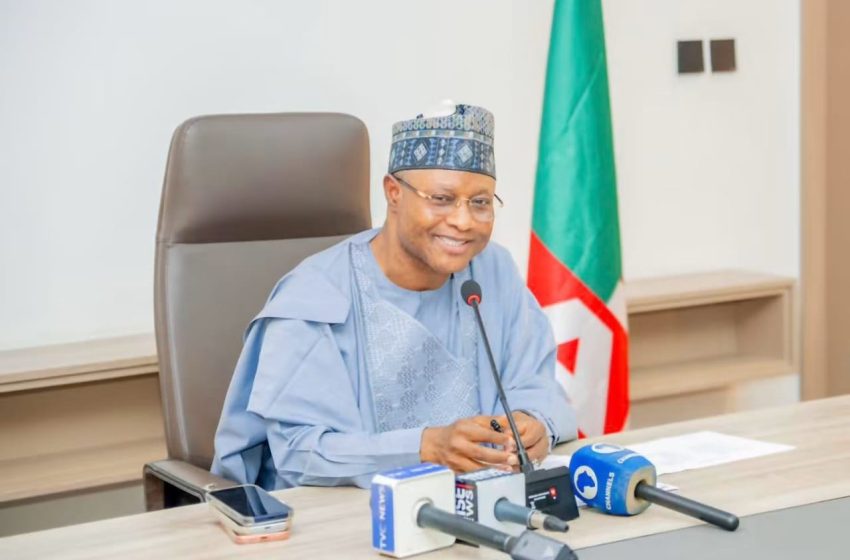
UBA SANI: KADUNA’S EMPHASIS ON INCLUSION, DEVELOPMENT AND HUMAN CAPITAL
The outcome of the Osun governorship election has rightly attracted national attention, not merely because of who won or lost, but because of what the result represents in the unfolding political trajectory toward 2027. For discerning political observers, Osun was not just an election; it was a signal. A signal about structure, alignment, and the evolving nature of political capital in Nigeria.
Yet, while Osun provides the signal, Kaduna State under Governor Uba Sani offers something more compelling: a working strategy.
To understand this distinction is to understand where the 2027 election may ultimately be decided.
BEYOND ARITHMETIC: THE SHIFT FROM VOTES TO VALUE
A recurring limitation in Nigerian political analysis is the over-reliance on arithmetic, reducing elections to the simple aggregation of historical vote patterns. Osun has already demonstrated the constraints of this approach. Electoral outcomes are not static assets transferable from one cycle to another; they are dynamic expressions of trust, institutional strength, and prevailing context.
Governor Uba Sani appears to demonstrate a clear understanding of this reality.
Rather than merely preparing for an election cycle, his administration is building what can be described as convertible political capital, capital that translates governance performance into electoral credibility.
This is where Kaduna becomes a case study.
BRIDGE-BUILDING AS POLITICAL INFRASTRUCTURE
Kaduna has historically reflected Nigeria’s broader complexities, religious diversity, ethnic plurality, and periods of political tension. In such an environment, leadership requires more than administrative competence; it demands deliberate and sustained bridge-building.
Governor Uba Sani’s approach has been defined by a conscious effort to reduce fault lines rather than exploit them.
His governance style reflects a clear strategic orientation:
– Engagement across religious divides
– Inclusive policymaking that reflects diverse constituencies
– A leadership tone that prioritizes cohesion over confrontation
THIS IS NOT INCIDENTAL POLITICS. IT IS STRUCTURED RECONCILIATION.
In a context where divisions are often instrumentalized for electoral advantage, such an approach transforms unity into a measurable political asset.
Infrastructure Turnaround as a Trust Mechanism.
Political messaging may attract attention, but infrastructure builds credibility.
Across Kaduna State, the sustained focus on roads, rural connectivity, and public service delivery is doing more than addressing developmental gaps, it is reinforcing state legitimacy. Infrastructure, in this sense, is not only physical; it is also psychological.
When communities experience tangible improvements:
– Confidence in leadership increases
– Government presence becomes more visible
– Political loyalty becomes anchored in performance
Governor Uba Sani’s infrastructure agenda is therefore not merely developmental; it is a political stabilization strategy.
It directly addresses a fundamental voter question ahead of 2027: “What has government delivered?”
UNITY OF PURPOSE AND THE POLITICS OF INCLUSION
One of the most symbolically significant decisions in Kaduna’s evolving political architecture is the appointment of a Christian Deputy Governor.
In a state where religious balance has historically shaped political narratives, this decision extends beyond symbolism. It reflects intentional inclusion, communicates respect, and strengthens confidence among constituencies that may otherwise feel marginalized.
More importantly, it reframes political calculation.
The Christian Deputy Governor represents not merely a balancing arrangement, but a trust multiplier.
It signals that governance in Kaduna is anchored on partnership rather than dominance. In the long term, partnership-driven politics tends to outperform polarization, particularly in high-stakes national elections.
FROM GOVERNANCE TO ELECTORAL CONVERSION
The true measure of political capital lies in its ability to convert governance performance into electoral outcomes.
Kaduna’s emerging model suggests a structured pathway:
1. Build Trust through Performance
Infrastructure delivery, social investment, and responsive governance establish credibility.
2. Sustain Unity through Inclusion
Religious and ethnic balance reduces resistance and broadens acceptance.
3. Convert Trust into Votes through Structure
A cohesive political base emerges from satisfied and included citizens.
This represents a more sophisticated framework than simple vote aggregation. It is a system of political accumulation.
KADUNA AS A 2027 MICROCOSM
If Osun has highlighted the importance of political structure and alignment, Kaduna is demonstrating how such structure is deliberately constructed and sustained.
Governor Uba Sani is not relying on rhetoric, speculative alliances, or short-term political calculations. Instead, he is methodically building a durable political ecosystem anchored on:
– Performance
– Inclusion
– Stability
– Strategic alignment
In many respects, Kaduna reflects the broader national challenge: how to manage diversity while delivering development, and how to translate governance into electoral strength.
THE STRATEGIC IMPLICATION FOR 2027
The lesson for 2027 is becoming increasingly evident.
Elections will not be determined by:
– Rhetorical intensity
– Temporary alliances
– Or assumed vote transfers
They will be shaped by those who can:
– Establish trust before the campaign
– Sustain unity during governance
– And mobilize credibility at the ballot box
Governor Uba Sani’s Kaduna is increasingly aligning with this framework.
CONCLUSION: From Signal to Strategy
Osun has illustrated what becomes possible when political structure aligns with electoral opportunity.
Kaduna is demonstrating how that structure is intentionally built.
The distinction is significant.
One represents a moment.
The other represents a method.
As 2027 approaches, the states and leaders who understand this distinction will play a defining role in shaping the national outcome.
In that evolving conversation, Kaduna is no longer merely participating.
It is setting a standard.
The chessboard is indeed set, but while others are still analyzing the pieces, Kaduna is already executing its strategy.
Ben SD Kure
Managing Director Chief Executive Officer
Kaduna State Media Corporation (KSMC)