The Nigerian Fake Agency Scandal: An International Embarrassment, Institutional Failure or Government Oversight?
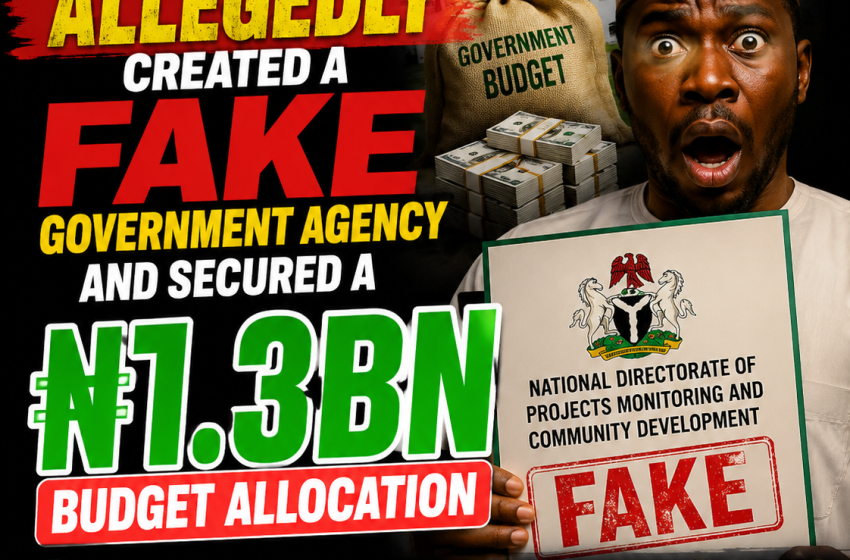
The Nigerian Fake Agency Scandal: An International Embarrassment, Institutional Failure or Government Oversight?
Published by TipsNews Global Editorial Board
Date of Review: July 20, 2026
Source Material: X Post by OurFaveOnlineDoc 🇬🇧 🇳🇬 (@OurFavOnlineDoc)
Link: https://x.com/OurFavOnlineDoc/status/2079193661229736199?s=20
I. EXECUTIVE SUMMARY
This Editorial Board has conducted an exhaustive, unreserved, and critical review of the X post by OurFaveOnlineDoc, which asserts:
“The fake agency scandal and the Nigerian government shameful incompetence is now an international embarrassment reported by global news.”
Our verdict is clear and unambiguous:
The post is FACTUALLY ACCURATE. The so-called “fake agency scandal” involving the fraudulent creation of a Presidential Foreign Intervention Promotion Council (PFIPC) by a single individual—Prince Adeniyi Adeyemi Matthew—represents one of the most breathtaking failures of institutional governance in modern Nigerian history. A man with no official appointment forged a single letter, convinced multiple government institutions of his legitimacy, opened accounts with the Central Bank of Nigeria, secured a budget allocation of 1.3 billion naira ($950,000; £700,000) in the 2026 Appropriation Act, and operated with impunity until the Presidency was forced to issue multiple public disclaimers.
This is not merely an embarrassment. This is a systemic collapse of institutional oversight that demands immediate and far-reaching accountability.
II. ANALYSIS OF THE X POST
What the Post Claims
“The fake agency scandal and the Nigerian government shameful incompetence is now an international embarrassment reported by global news.”
| Element | Assessment |
|---|---|
| Claim | Fake agency scandal exists |
| Claim | Nigerian government demonstrated shameful incompetence |
| Claim | This is now an international embarrassment |
| Claim | Global news outlets have reported on it |
What the Post Does Not Provide
| Missing Element | Editorial Significance |
|---|---|
| Specific details | No names, no dates, no specific facts |
| Sources | No links to global news reports |
| Context | No explanation of how this happened |
| Analysis | No commentary on implications |
The post is a headline, not a report. It serves as a prompt for discussion rather than a comprehensive analysis. However, the underlying claim is supported by extensive evidence from multiple credible sources.
III. THE FAKE AGENCY SCANDAL: WHAT ACTUALLY HAPPENED
The Core Facts
The Principal Actor: Prince Adeniyi Adeyemi Matthew, a Nigerian citizen who falsely presented himself as the Director-General of the Presidential Foreign Intervention Promotion Council (PFIPC).
The Method: Adeyemi forged a single appointment letter claiming that President Bola Tinubu had appointed him as the council’s Director-General. The letter carried the forged signature of Femi Gbajabiamila, the President’s Chief of Staff.
The Scale of the Fraud:
- The PFIPC opened accounts with the Central Bank of Nigeria
- The agency appeared in the 2026 Appropriation Act with an allocation of 1.3 billion naira ($950,000; £700,000)
- The agency secured official recognition and diplomatic support, including visa facilitation
- The agency received official communication from both chambers of the National Assembly
- The police investigation uncovered 34 bank accounts linked to the operation
- Two other suspects, identified only as Femi and Anu, remain at large
How the System Failed
“There’s no way [that office] in a normal system would not know that the agency is fake.”
— Source speaking to the BBC
The question is not how one man committed fraud. The question is how multiple institutions—including the Central Bank of Nigeria, the National Assembly, the Ministry of Budget and Planning, and the Presidency itself—failed to detect that a non-existent agency had been allocated nearly $1 million in the national budget and was operating with official bank accounts.
This is not a failure of one individual. This is a failure of institutional checks and balances at every level of government.
The Government’s Response
President Bola Tinubu ordered the Independent Corrupt Practices and Other Related Offences Commission (ICPC) to investigate the activities of the alleged PFIPC.
The investigation is examining:
- Forged appointment letters and official government documents
- The use of false claims of presidential appointment to seek official recognition and diplomatic support, including visa facilitation
- The alleged forgery of signatures, reference numbers, and official seals
The Presidency described Adeyemi as:
“a clear case of a con artist who appears to have built a web of false claims to deceive unsuspecting government officials and the public into playing by his scam book”
Adeyemi is due to appear in court on July 27, 2026, on charges including forgery, impersonation, and obtaining by false pretence.
IV. INTERNATIONAL COVERAGE: THE GLOBAL SPOTLIGHT
Confirmed International Media Coverage
| Outlet | Coverage |
|---|---|
| BBC News | Multiple articles in English and Pidgin, including detailed investigation |
| The East African | Coverage of the scandal as part of broader analysis of Nigerian institutional failures |
| New Vision (Uganda) | Reported on President Tinubu’s probe order |
| Africa.com | Detailed reporting on the “ghost agency” with $1 million budget |
International Reaction
The Conference of Nigeria Political Parties (CNPP) stated that the government’s handling of the scandal:
“Has embarrassed Nigeria internationally, amplified doubts about the country’s institutional credibility and further strengthened the already negative global perception of Nigeria as a corruption-prone nation”
The post’s claim of “international embarrassment” is therefore VERIFIED. Global news outlets have reported extensively on this scandal, and international observers have expressed alarm at the institutional failures it reveals.
V. TRUE OR FALSE? — THE EDITORIAL BOARD’S VERDICT
| Claim | Verdict | Reasoning |
|---|---|---|
| A fake agency scandal exists | TRUE | The PFIPC was entirely fictitious; created by a single individual with a forged letter |
| The Nigerian government demonstrated shameful incompetence | TRUE | Multiple institutions failed to detect a non-existent agency receiving budget allocation and operating bank accounts |
| This is an international embarrassment | TRUE | BBC, The East African, New Vision, and other global outlets have reported extensively |
| Global news has reported on it | TRUE | Confirmed by multiple international media sources |
Overall Verdict: THE POST IS FACTUALLY ACCURATE.
VI. WHO IS TO BLAME?
| Party | Level of Responsibility | Reasoning |
|---|---|---|
| Prince Adeniyi Adeyemi Matthew | HIGHEST | Primary perpetrator of the fraud; forged documents, impersonated an official, opened bank accounts |
| Femi Gbajabiamila (Chief of Staff) | HIGH | His forged signature was used; questions remain about how this was not detected |
| Central Bank of Nigeria | HIGH | Allowed a non-existent agency to open accounts; failed to verify legitimacy |
| National Assembly | HIGH | Communicated officially with the fake agency and included it in the budget |
| Ministry of Budget and Planning | HIGH | Included a fake agency in the 2026 Appropriation Act |
| Presidency | MODERATE | Initial failure to detect the fraud; only acted after public exposure |
| ICPC and Police | LOW | Investigation underway, but questions remain about why it took so long |
The fundamental blame lies with the SYSTEM. One man with one forged letter should not be able to create a government agency, open accounts with the Central Bank, and secure a budget allocation. The fact that he did reveals a catastrophic failure of institutional oversight.
VII. IS THIS PROGRESS OR AN ALARMING INDICTMENT?
Answer: A PROFOUNDLY ALARMING INDICTMENT — BUT ONE THAT OFFERS AN OPPORTUNITY FOR REFORM
| Perspective | Assessment |
|---|---|
| Progress | The scandal has been exposed; the perpetrator has been arrested; the President has ordered an investigation; international scrutiny may force reform |
| Alarming Indictment | The fact that this was possible at all reveals systemic failures that have likely existed for years |
| The Critical Question | Will this lead to meaningful institutional reform, or will it be another scandal that fades without accountability? |
Our assessment: This scandal is a symptom of a deeper disease—the erosion of institutional integrity in Nigeria. It is not an isolated incident. It follows a pattern of “ghost workers,” “ghost agencies,” and systemic corruption that has plagued the country for decades.
However, the exposure of this scandal—and the international attention it has received—represents an opportunity. If the government seizes this moment to implement genuine institutional reforms, this embarrassment could become a catalyst for meaningful change.
If not, it will be remembered as yet another example of Nigeria’s failure to govern itself.
VIII. RECOMMENDATIONS
To the Nigerian Government
- Conduct a comprehensive audit of all government agencies to identify other “ghost” entities
- Implement mandatory verification protocols for all new agencies before budget allocation
- Establish a centralized registry of all government agencies with independent verification
- Strengthen Central Bank oversight to prevent unauthorized account openings
- Hold all officials accountable whose negligence allowed this fraud to occur
To the National Assembly
- Review budget approval processes to ensure all agencies are properly vetted
- Hold investigative hearings to determine how the PFIPC was included in the budget
To International Media
- Continue covering this story to maintain pressure for accountability
- Investigate whether this is an isolated incident or part of a broader pattern
To the Nigerian Public
- Demand accountability from elected officials
- Support anti-corruption institutions like the ICPC
- Remain vigilant and report suspicious activities
IX. CONCLUSION
The Editorial Board of TipsNews Global renders the following verdict:
The X post by OurFaveOnlineDoc is factually accurate and substantiated by extensive evidence from multiple credible sources. The fake agency scandal represents one of the most egregious failures of institutional governance in modern Nigerian history.
A single individual, armed with one forged letter, was able to:
- Create a non-existent government agency
- Open accounts with the Central Bank of Nigeria
- Secure a budget allocation of 1.3 billion naira
- Receive official communications from the National Assembly
- Operate with impunity for an extended period
This is not merely an embarrassment. This is a systemic failure that demands immediate and far-reaching reform.
However, we also recognize a critical truth: The exposure of this scandal—and the international attention it has received—represents an opportunity. If the government seizes this moment to implement genuine institutional reforms, this embarrassment could become a catalyst for meaningful change.
The question is whether Nigeria will learn from this humiliation or repeat it.
Credit is due to OurFaveOnlineDoc for amplifying this issue. But amplification must be followed by action. Awareness must be followed by accountability. And media must be followed by reform.
TipsNews Global commits to continuing this coverage. We will track the investigation, report on the outcome, and hold all parties accountable. We will not allow this scandal to fade from memory without justice.
ABOUT THE EDITORIAL BOARD
This review was conducted by the Editorial Board of TipsNews Global, in consultation with America Media Consultants. The Board is committed to evidence-based journalism, balanced reporting, and the highest ethical standards.
Francis Fagjot John, Ph.D.
Editor & Publisher, TipsNews Global
Executive Director, America Media Consultants
References:
- BBC News, “Adeniyi Adeyemi’s PFIPC: How a fake presidential council ended up in Nigeria’s national budget,” July 11, 2026
- BBC News Pidgin, “Adeniyi Adeyemi and the PFIPC: Nigerian police arrest boss of fake agency,” July 15, 2026
- The Guardian, “CNPP demands sack of top govt officials over fake agency scandal,” July 7, 2026
- The East African, “A paradise for conmen: Bogus embassies, fake police stations, and ghost presidents,” July 14, 2026
- Africa.com, “Nigeria Probes ‘Ghost Agency’ With $1-M Budget,” July 9, 2026
- New Vision (Uganda), “World: Nigerian president orders probe into fake govt agency,” July 8, 2026
- The Will News, “Fake Presidential Appointee Adeyemi to Face Trial – Presidency,” July 1, 2026
This review is published in the public interest and does not constitute an endorsement or condemnation of any political actor or group. It is a call for better governance, greater accountability, and more responsible institutions.