CRITICAL REVIEW: “The End of Northern Unity? New Ethnic Blocs Rise Against Fulani Hegemony”
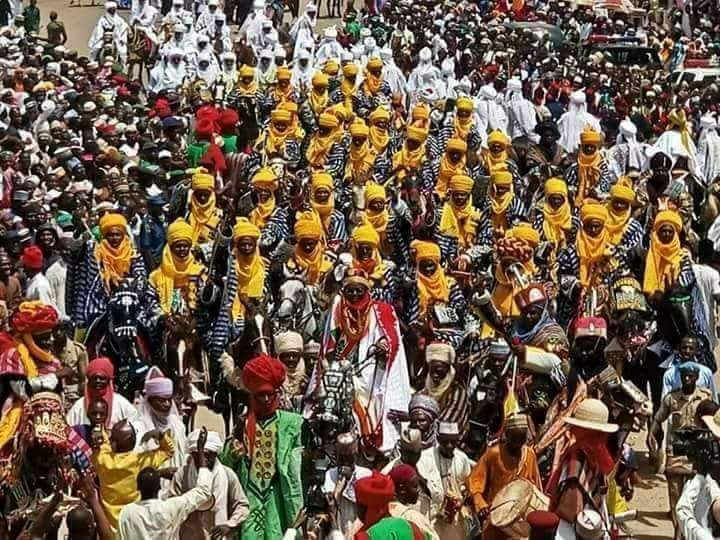
CRITICAL REVIEW: “The End of Northern Unity? New Ethnic Blocs Rise Against Fulani Hegemony”
Source: Sir Kay (@Rise_Forge) on X
Link: https://x.com/Rise_Forge/status/2079071845194637513[reference:1]
I. INTRODUCTION
On behalf of TipsNews Global, we have conducted a critical review of the controversial documentary promoted by Sir Kay (@Rise_Forge) on the X platform (formerly Twitter). The post asserts:
“CONTROVERSIAL DOCUMENTARY: The End of Northern Unity? New Ethnic Blocs Rise Against Fulani Hegemony Is Northern Nigeria’s long-standing political alliance beginning to crack? This documentary explores the rise of new ethnic blocs, changing political dynamics, and the growing debate over power, identity, and influence in the North.”
Credit is given to the original source: Unfiltered Report HQ.
The post explicitly frames the documentary as a “conversation that’s generating intense reactions”, signaling that the content is deliberately provocative and designed to stimulate debate rather than present settled facts.
II. CRITICAL REVIEW OF THE POST AND ITS IMPLICATIONS
A. What the Post Claims vs. What It Does Not Claim
Observation: The post is promotional, not investigative. It is designed to drive views and engagement. The creator, Sir Kay (@Rise_Forge), positions himself as a curator of controversial content rather than a primary source of verified journalism.
B. Contextual Analysis: Northern Nigeria’s Political Landscape
Northern Nigeria has historically maintained a degree of political unity through organizations like the Arewa Consultative Forum and the Northern People’s Congress. However, this unity has never been monolithic. Ethnic, religious, and economic divisions have always existed beneath the surface.
Key historical tensions include:
- Fulani Hegemony: The Fulani have historically dominated northern politics through the Sokoto Caliphate’s legacy and, more recently, through political leadership at both state and federal levels.
- Emerging Ethnic Blocs: Groups like the Hausa, Nupe, Gwari, Kanuri, and Tiv have increasingly asserted their identity and political interests.
- Economic Disparities: The north faces significant development challenges, including poverty, insurgency, and infrastructure deficits, which exacerbate ethnic tensions.
The documentary’s claim—that new ethnic blocs are rising against Fulani hegemony—is plausible but requires rigorous evidence. The question is whether this represents a genuine political realignment or a media narrative amplified by social media.
C. Media Literacy Assessment
The post is more valuable as a signal of public discourse than as a source of verified truth. It reflects that northern Nigerian identity politics are being actively debated—but does not, by itself, establish the factual basis of that debate.
III. TRUE OR FALSE? — A CRITICAL ASSESSMENT
The claim: Northern Nigeria’s political alliance is cracking; new ethnic blocs are rising against Fulani hegemony.
Answer: PARTIALLY TRUE — BUT THE EVIDENCE IS INCOMPLETE AND CONTEXT-DEPENDENT
What Makes It True:
- Northern Nigeria has always been ethnically diverse; the Fulani have historically been politically dominant, but this dominance has been contested.
- Recent political developments—including the emergence of new political parties, regional movements, and identity-based advocacy groups—suggest shifting dynamics.
- Social media has amplified ethnic and regional discourse, making tensions more visible.
What Makes It False or Exaggerated:
- The claim of “cracking” is premature. Northern political unity has survived many challenges; institutional structures remain intact.
- The documentary is one perspective, not the full picture. Without access to the documentary’s sources and methodology, its conclusions cannot be verified.
- The post is promotional, not journalistic. It does not provide evidence or citations.
Conclusion: The claim is provocative but unsubstantiated. It raises important questions but does not provide definitive answers.
IV. WHO IS TO BLAME?
The primary blame lies with content creators and promoters who prioritize engagement over accuracy. The documentary’s producers (Unfiltered Report HQ) and its promoter (Sir Kay) are responsible for presenting the claims without robust evidence.
V. IS THIS PROGRESS OR A TIMELY ALARMING DIVIDE?
Answer: A TIMELY ALARMING DIVIDE — BUT ONE THAT CAN BE CONSTRUCTIVELY ADDRESSED
| Perspective | Assessment |
|---|---|
| Progress | Open debate about ethnic dynamics can lead to greater accountability, inclusion, and reform |
| Alarming Divide | Framing the narrative as “ethnic blocs against Fulani hegemony” risks inflaming tensions rather than resolving them |
| Unity | The very fact that these issues are being debated publicly—rather than suppressed—is a form of progress |
Our Conclusion: The documentary represents both a symptom and a potential cause of division.
- Symptom: It reflects existing ethnic tensions and political realignments in Northern Nigeria.
- Potential Cause: If taken as definitive truth, it could exacerbate divisions by framing ethnic competition as inevitable or zero-sum.
However, we must be precise: The documentary’s existence is a sign of a society grappling with its identity—which is, in itself, a form of progress. The danger lies in how the narrative is framed and consumed.
VI. FINAL ASSESSMENT
| Question | Answer |
|---|---|
| Is the claim true or false? | PARTIALLY TRUE — but evidence is incomplete; the claim is provocative, not proven |
| Who is to blame? | Content creators and promoters who prioritize engagement over accuracy |
| Is this progress or divide? | A TIMELY ALARMING DIVIDE — but one that offers an opportunity for constructive dialogue |
VII. RECOMMENDATIONS
- To the Public: Approach such content with critical media literacy. Ask: Who produced this? What evidence is provided? What is the purpose?
- To Content Creators: Provide sources, data, and balanced perspectives. Controversy drives views, but credibility builds trust.
- To Platforms (X, etc.): Invest in fact-checking and contextual labeling for politically sensitive content.
- To Political Leaders: Address ethnic tensions transparently—through inclusive governance, not suppression.
- To Media Organizations: Independent verification missions, like those proposed by America Media Consultants, can provide evidence-based assessments of regional dynamics.
VIII. CLOSING THOUGHTS
The documentary promoted by Sir Kay (@Rise_Forge) raises legitimate questions about Northern Nigeria’s political future. However, the framing—“New Ethnic Blocs Rise Against Fulani Hegemony”—is inflammatory and lacks evidentiary support in the post itself.
Northern Nigeria’s future will be shaped not by documentaries alone, but by the choices of its leaders, institutions, and citizens. The challenge is to transform debate into dialogue, and division into development.
Credit is due to Sir Kay and Unfiltered Report HQ for generating a conversation that matters. But conversation must be followed by verification.
Dr. Francis Fagjot John, Ph.D.
Editor & Publisher, TipsNews Global
Executive Director, America Media Consultants
📱 Hashtags for Public Awareness:
text
#NorthernNigeria #EthnicDynamics #MediaLiteracy #VerifyNotDivide #TipsNewsGlobal #NigeriaUnity #FulaniHegemony #CriticalReview
This review is published in the public interest and does not constitute an endorsement or condemnation of any political actor or group.